Posted on
August 02, 2014 by
Dean Hybl
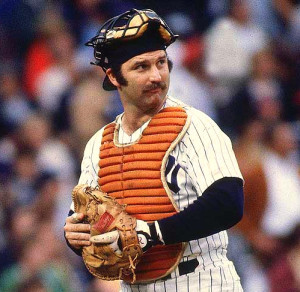
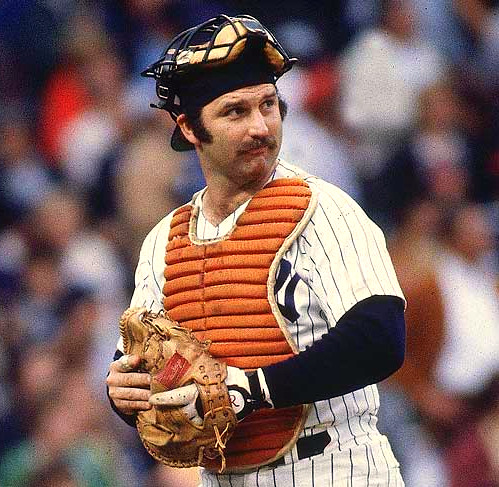
It was 35 years ago that New York Yankees captain Thurman Munson died in a plane accident.
While current New York Yankees captain Derek Jeter has spent much of this season saying good bye to baseball fans across the country, it was 35 years ago that another Yankees captain left the game in a sudden and tragic manner.
On August 2, 1979, the two-time defending World Series Champion New York Yankees were struggling to stay in contention in the American League East. Despite having completed a must-needed three game sweep the day before with a 9-1 win over the Chicago White Sox, the Yankees stood in fourth place in the division 14 games behind the first place Baltimore Orioles.
A much needed off day, it would prove to be one of the toughest in team history.
After the three game series in Chicago, Yankee captain and veteran catcher Thurman Munson chose to spend the off-day in his hometown of Canton, Ohio, rather than travel back to New York.
An 11-year veteran, Munson had been the fourth pick of the 1968 MLB Draft and in 1970 was named the American League Rookie of the Year. Over the next decade, Munson was considered the “heart and soul” of the Yankees as they looked to regain the glory of past decades.
In April of 1976, a season that would end with the first World Series appearance for the Yankees in a dozen years, Munson became the first New York player to be designated as team captain since the retirement of Lou Gehrig in 1939.
Munson was a seven-time All-Star and in 1976 was named the American League MVP. He posted three straight seasons of 100+ RBIs from 1975-77 and had five seasons with a .300 or higher batting average. Read the rest of this entry →
Tags: Derek JeterNew York YankeesThurman Munson
Category
Baseball, Sports History
Posted on
July 16, 2014 by
Martin Banks
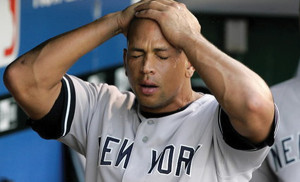
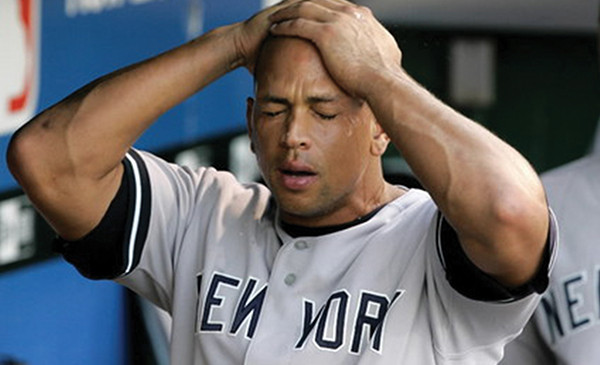
Performance enhancing drugs are a major problem in Major League Baseball, largely because of the league’s lack of testing until recent years. Following the 1994 player’s strike that led to the cancellation of the World Series, baseball’s popularity in the United States dwindled.
The only thing that brought the fans back was the 1998 home run chase between Mark McGwire and Sammy Sosa, which ended with both players breaking Roger Maris’ single season record. It was later revealed that both players were taking PEDs during this season, but MLB did not have any testing procedures in place. In recent years, baseball has taken some steps towards cleaning up the sport, which has included suspensions of some high profile players.
First Suspensions
After MLB introduced its new drug policy in January of 2004, it was only a matter of time before some players were suspended. The first suspension was handed out on April 3, 2005 when Tampa Bay Devil Rays outfielder Alex Sanchez was given a 10-day ban. A total of 12 players were suspended in 2005, including all-stars Rafael Palmeiro, Ryan Franklin, and Matt Lawton. In 2005, the league and the player’s association agreed to make the penalties harsher for first time offenders, since each of these players was only suspended for 10 days. Read the rest of this entry →
Tags: BaseballPEDs
Category
Baseball, Scott Huntington, Sports History
Posted on
July 05, 2014 by
Dean Hybl
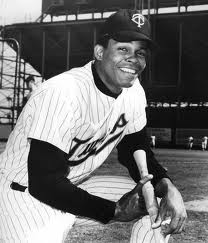
Rod Carew
With the Major League All-Star Game being played this year in Minnesota, we recognize as the July Sports Then and Now Vintage Athlete of the Month one of the best hitters of the last half a century who was named to 18 straight All-Star teams, including in each of his 12 seasons with the Twins.
Few have been as good at the craft of hitting a baseball as Rod Carew. During 19 major league seasons, Carew won seven batting titles and hit .330 or better ten times. Read the rest of this entry →
Tags: Baseball Hall of FameCalifornia AngelsMinnesota TwinsRod Carew
Category
Baseball, Sports History, Vintage Athletes
Posted on
July 03, 2014 by
Dean Hybl
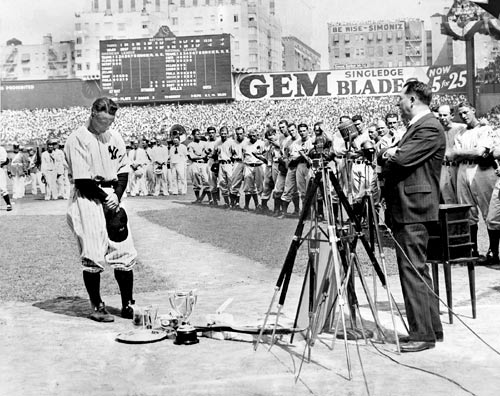
Lou Gehrig said goodbye to his fans on July 4, 1939.
Imagine if one of the most iconic athletes of the current era suddenly retired, announced he had an incurable disease and within two years was dead. That is exactly what happened in 1939 when iconic New York Yankees star Lou Gehrig pulled himself out of the lineup after 2,130 consecutive games and then 75 years ago, on July 4, 1939, said goodbye to New York fans with his famous “luckiest man on the face of the earth” speech.
For 13 years, Gehrig was baseball’s most durable player as he famously was in the lineup every day. But durability wasn’t his only strength, he was also the best first baseman of his generation and was a run-producing machine.
Only Gehrig could push the Sultan of Swat, Babe Ruth, into the number three spot in the batting order. He drove in 140 or more runs nine times during his career, including 185 RBI during the 1931 season. In 1934 he claimed the triple crown as he hit .363 with 49 home runs and 166 RBI.
Interestingly, likely because the Yankees did not reach the World Series that season, he finished only fifth in the MVP voting as Mickey Cochrane earned the award. Read the rest of this entry →
Tags: Lou GehrigNew York Yankees
Category
Baseball, Great Moments, Sports History
Posted on
June 16, 2014 by
Dean Hybl
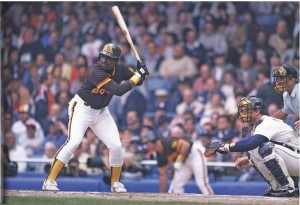
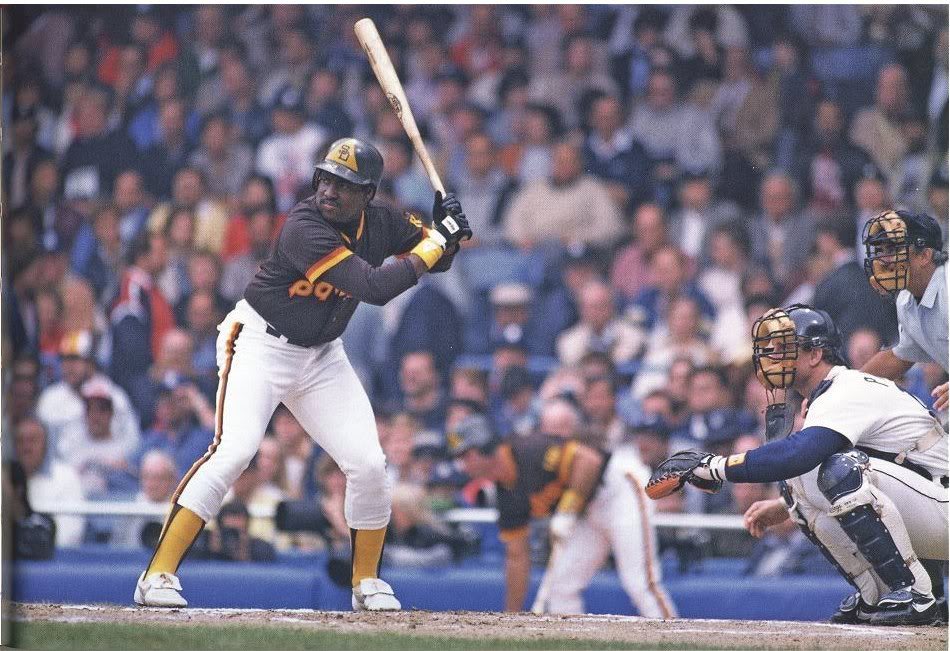
Tony Gwynn spent his entire 20 year career with the San Diego Padres and led them to their only two World Series appearances.
The baseball world lost another all-time great with the death Monday of former San Diego Padres star Tony Gwynn at the age of 54 as a result of his long-time bout with cancer. The popular player known as “Mr. Padre” will best be remembered for his sweet swing and his infectious smile and love for the game.
There are many statistics to describe just how great a hitter Gwynn was during his 20 year Major League career, but I think there is one that illustrates it best and properly cements his place in baseball history.
Since the retirement of Lou Gehrig 75 years ago, of all the players who have played in the majors only Ted Williams (.344) has hit for a higher career batting average than the .338 average posted by Gwynn.
What is even more impressive is that of players who retired since Williams left the game in 1960, the next best average behind Gwynn is Stan Musial at .331. Of players whose careers actually overlapped with Gwynn, the next closest averages are more than 10 points below him belonging to Wade Boggs (.3279) and Rod Carew (.3278).
A California native who played both basketball and baseball at San Diego State, Gwynn was drafted by the Padres in the third round of the 1981 amateur draft and made his major league debut just a year later. Read the rest of this entry →
Category
Baseball, Sports History
Posted on
June 05, 2014 by
Martin Banks
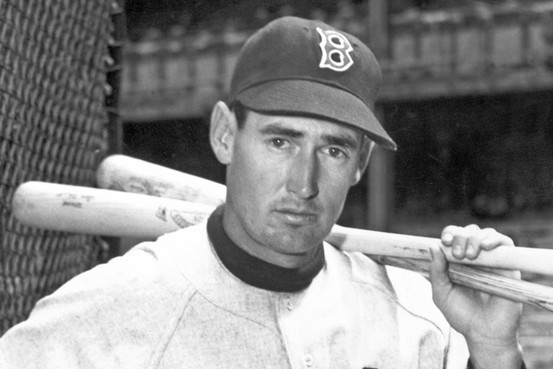
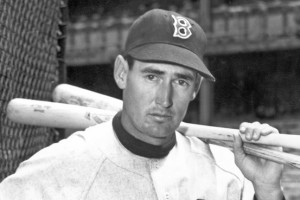
On this week of sports history in 1959, the great Ted Williams got the 2,500th hit of his Hall of Fame career. And since it’s always an appropriate day to talk about the fantastic talent of Williams, this occasion is as good as any. Let’s take a look at what he did for the Boston Red Sox and how he earned the nickname, “The Greatest Hitter Who Ever Lived”. Williams did just about everything a hitter can do, going from a young baseball player in San Diego to a first-year Hall of Famer and baseball legend.
From Birth to Baseball
Williams, who was named after Teddy Roosevelt and his father, was born in San Diego as Teddy Samuel Williams in 1918. Before he could earn the nicknames “The Kid”, “The Splendid Splinter” and “The Greatest Hitter Who Ever Lived”, Williams was first taught how to play ball by his uncle, Saul Venzor. Williams starred on his high school baseball team at Herbert Hoover High as a pitcher, garnering himself offers from the New York Yankees and St. Louis Cardinals. However, his mother thought he was too young to move far away, so Williams signed on to play for the minor league San Diego Padres.
It didn’t take long for Williams to be noticed after playing ball for San Diego by Red Sox general manager Eddie Collins. After signing with Boston and playing some minor-league ball, Williams got his chance in The Show. Williams played from 1939-1942, including his legendary 1941 season (which we will talk about later), before being drafted into the military. Williams would serve on both the U.S. Marine Corps and the U.S. Navy from 1942 -1945 and then again from 1952-1953. Williams’ unique major league career didn’t keep him from becoming at least one of the greatest. Fittingly, Williams homered on his final-ever at bat in 1960. Read the rest of this entry →
Tags: Baseballgreatest hittersports historyTed Williams
Category
Baseball, Scott Huntington