Less than 24 hours after the World Health Organization
declared the spread of the coronavirus to be a pandemic the sports world is
coming to a screeching halt as sports leagues and college conferences struggle
to deal with this intersection between public health and the sports world.
It started Wednesday afternoon with the NCAA announcing that
all of their upcoming championships would be played without fans.
With most of the premier Division I conferences having
started their men’s basketball tournaments earlier this week, it didn’t take
long until they all announced that they would not admit fans starting on Thursday.
However, after a Wednesday evening address by the President
as well as continued uncertainty on how best to address the growing crisis, by
soon before game time on Thursday most conferences, including the ACC, Big Ten
and SEC had all canceled the remainder of their tournaments. The Big East tipped
off their first game on Thursday (Creighton against St. Johns), but the game
and tournament were later canceled.
So, what is typically
one of the most exciting weekends for college basketball now looks to be an
opportunity to catch up on shows from Netflix or Amazon Prime.
College basketball is not the only major sports group
impacted by the growing crisis.
After two members of the Utah Jazz tested positive for the
virus the game Wednesday night between the Oklahoma Thunder and Utah Jazz was
postponed and the NBA later announced an immediate suspension of their season.
The Vintage Sports Then and Now Athlete of the Month came to
national prominence in college basketball’s “Game of the Century” and then won
an NBA title while becoming one of the top players in league history.
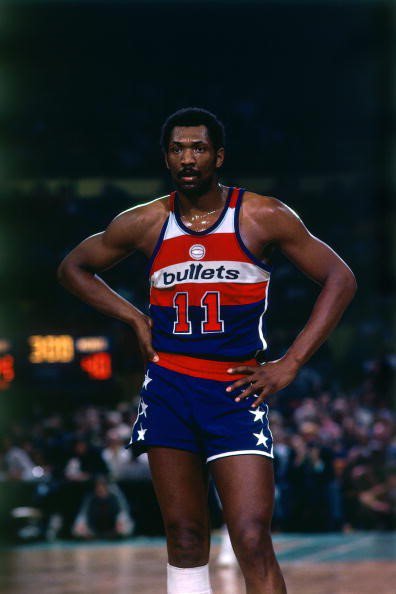
A three-time college basketball All-American at the University of Houston, Elvin Hayes helped lead the Cougars to three straight NCAA Tournaments and a pair of Final Fours.
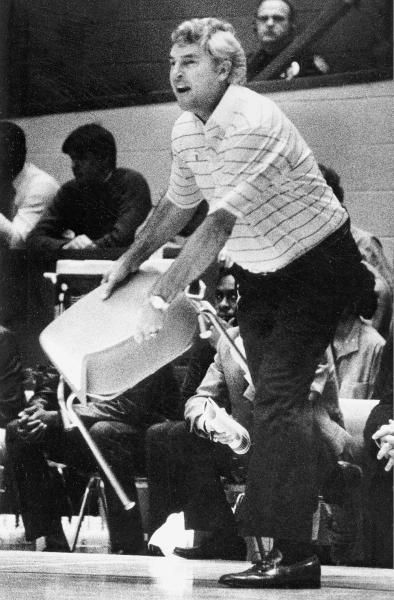
Few figures in college sports have towered over the domain
as forcefully as that of Bobby Knight over college basketball for more than 30
years. Known as “The General”, Knight retired
in 2008 as the all-time winningest coach in Division I men’s basketball history
with 902 victories (currently ranks 3rd) and is also credited with
ensuring that his players were not just athletes, but true student-athletes.
However, his legacy is forever tarnished by his reputation
as a bully and inability to control his anger sometimes both on and off the
court.
Today, February 23rd, marks the 35th
anniversary of one of his most famous blowups and in many ways the event that
foreshadowed his fall from professional grace.
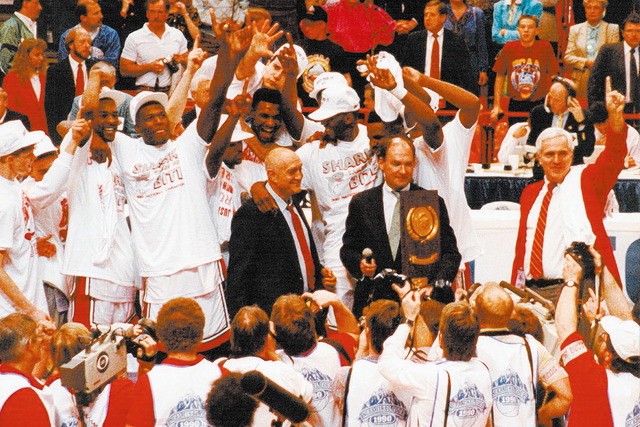
UNLV won the 1990 NCAA Men’s Basketball title representing the Big West Conference.
The last time a mid-major program won the NCAA Men’s Basketball Tournament, George H.W. Bush was the President of the United States. The 1990 UNLV Runnin’ Rebels of the Big West Conference became the second mid-major in NCAA history to cut down the nets in that Tournament, joining the 1986 Louisville Cardinals, who were members of the Metro Conference at the time. Since then, just 13 mid-major teams have advanced to the Final Four and five have lost in the National Championship Game. Most recently Loyla-Chicago’s magical Final Four run as an 11th seed in 2018 captured the hearts of America. But, perhaps more than any time since 1990, there’s a strong likelihood that a mid-major program wins it all in 2020.
Just one undefeated squad currently remains (No. 4 San Diego State: 19-0) and just two other teams in the AP Top 25 have only one loss (No. 1 Baylor: 15-1 and No. 2 Gonzaga: 20-1). A whopping 19 other teams in the Top 25 have three-plus losses, which is a clear indication that parity is at an all-time high. Even the experts who give out college basketball picks are having a tough time finding wins this year.Of those Top 25 teams, just Baylor and Gonzaga are undefeated against their ranked opponents, as well. Further, those two teams, along with San Diego State and No. 7 Dayton, are the only teams in the Top 25 with a perfect road record.
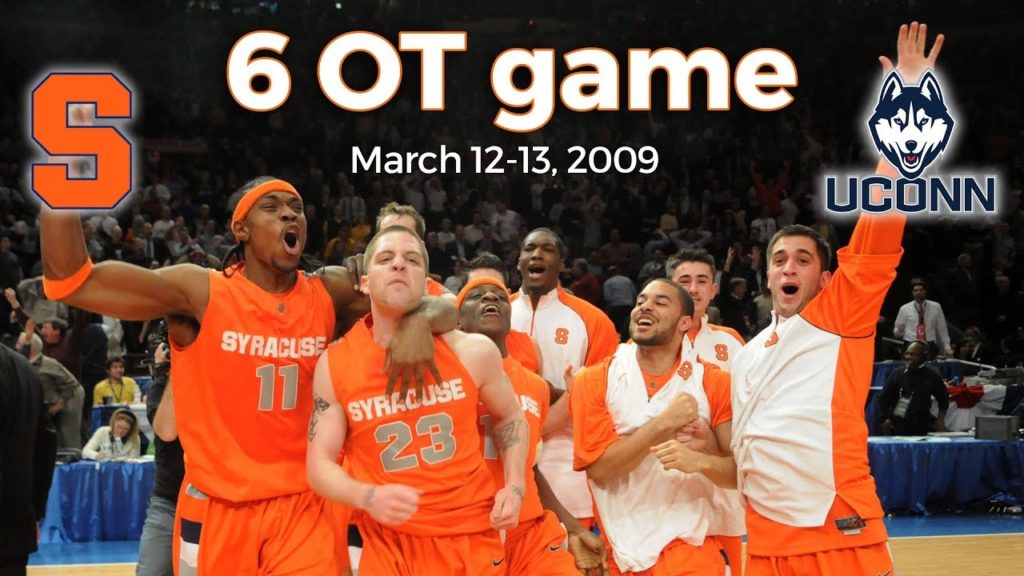
It was one of the most entertaining games in the history of college basketball. The six overtime marathon of a battle between Syracuse and Connecticut in the quarterfinals of the 2009 Big East Tournament was for starters, thrilling. Adjectives are never ending in describing it. Phenomenal. Amazing. Exhausting. Climactic.
Syracuse players celebrate their thrilling six-overtime victory over Connecticut in the quarterfinals of the 2009 Big East Tournament on March 12 and 13.
Filled
with the suspense and drama on when, not to mention if, the game would ever end,
it was equally as attractive for being a
marquee matchup of two longtime Big East rivals lead by prestigious head coaches
in Jim Boeheim of the Orange and Jim Calhoun of the Huskies. The glamour and
glitz of New York City added to this game as the school’s dueled on the
national stage of Madison Square Garden, known as the world’s most famous arena.
Both teams were ranked in the AP Poll with Connecticut at No. 3 and Syracuse at
No. 18. The sixth-seeded Orange and the third-seeded Huskies were also meeting
for the fourth time in the last five seasons in the Big East Tournament with
Syracuse having won the prior three matchups from 2005 through ’07.
In
playing the longest ever game in the shot clock era, Syracuse and Connecticut
tied for the second longest game in the history of NCAA Division I college
basketball. Only two other games have ever gone six overtimes. Both those
happened in the 1950’s when Minnesota beat Purdue 59-56 in 1955 and Niagara
beat Siena 88-81 in 1953. The game was eclipsed in number of overtimes only by
a game on Dec. 21, 1981 when Cincinnati beat Bradley 75-73 in seven overtimes. That
game in 1981 tied for the most overtimes in the history of college basketball
regardless of NCAA classification.
However
overtime almost never happened for the Orange and Huskies.
Connecticut
freshman guard Kemba Walker’s offensive rebound and layup with 1.1 seconds left
in regulation tied the game at 71. Following a Syracuse timeout, Orange junior
guard Eric Devendorf gathered a long inbounds pass off a deflection and quickly
got off a 3-point shot that went in giving the Orange an apparent victory.
However replays showed that the ball was still contacting Devendorf’s
fingertips as the buzzer sounded and the basket was waived off by officials and
the game went into overtime.
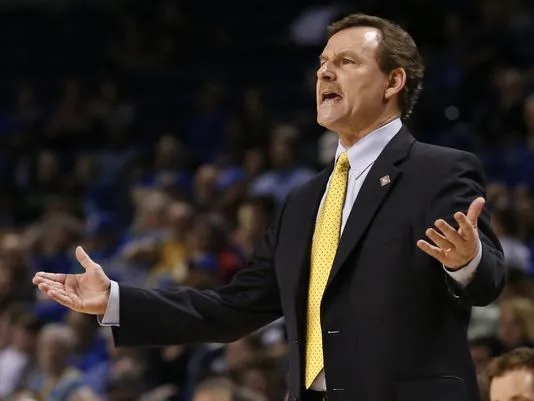
In 16 seasons as men’s basketball coach at William & Mary, Tony Shaver won more games than were won in the 20 seasons prior to his arrival.
It seems like a day doesn’t go by this time of year without another reminder that college athletics is really a major business that likes to pretend it is something more noble and altruistic.
Full disclosure that today’s example is a bit personal and especially frustrating for me because it involves a former colleague who has spent his entire career representing all the positive attributes that college sports supposedly are about.
After 16 years of success that is unparalleled in the history of William & Mary men’s basketball, the college has decided to part ways with 65-year-old head coach Tony Shaver.
In a statement, Athletic Director Samantha Huge said that “We have high expectations for our men’s basketball program, including participating in the NCAA tournament, and we will not shy away from setting the bar high. Now is the time to begin a new chapter in William & Mary basketball.”
That sounds all well and good, but what Huge seems to not understand is that prior to the arrival of Shaver, “high expectations” for the men’s basketball program basically meant double-digit victories every few years.