Posted on
May 06, 2014 by
Martin Banks
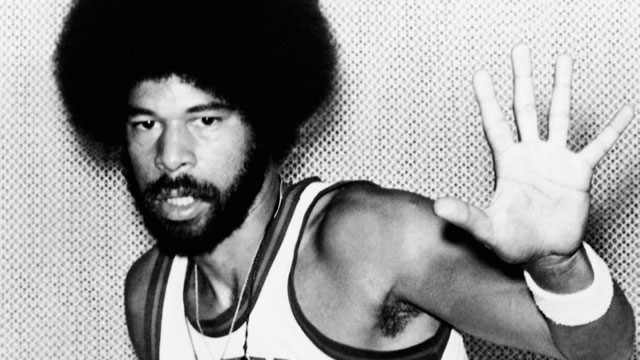
I recently got to interview basketball legend Wali Jones, who won the NBA Championship with Wilt Chamberlain and the 76ers in 1967. We talked about some basketball history, as well as the Masters Basketball Association Tournament that’s going on this week in Florida. The MBA tourney features high competition across teams with age groups from 40+ all the way up to 70+. Enjoy this conversation with an NBA Champion:
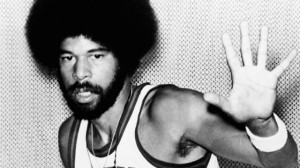
Hi Wali! Thanks for taking the time to talk. First of all, you’ve had a very impressive history. I saw you went to the same high school as Wilt Chamberlain?
He was before me, but the team I played on after was very good. My brother played on two champion teams with him actually. I played with Wayne Hightower, and we were 84-4 in high school. I went to prep school, graduated in February and played with some of the great public league players and we were 18-1.
What was it like then going to the NBA and having a lot more competition?
Well, first the opportunity to play at Villanova was a tremendous thing, with the big five. We accomplished so much there, and some of the great NBA players played on that team. Jim Washington, Richie Moore. Those are guys I played with who made it to the next level. Then to be drafted by the guy who was the first African American to play in the NBA, Earl Lloyd. I eventually made it onto the Baltimore Bullets where I made the NBA All-Rookie Team there as a rookie. Just a footnote, I just left the owner of the Baltimore Bullets, Earl Foreman. We just had a reunion with the Virginia Squires at Virginia Beach, so that’s where I’m coming from.
Oh cool! How was that?
Oh wonderful. Dr. James, Charlie Scott, and even my teammate from the Utah Stars Jumbo Aikens was there. So it was a big reunion reminiscing about things like what we were just talking about, the opportunity to play in the NBA and ABA. It was outstanding to play with some of the greatest ballplayers of that time. I think there were only 18 teams so it was a great opportunity. Read the rest of this entry →
Tags: MBANBAWali JonesWilt Chamberlain
Category
Basketball, Scott Huntington, Sports History
Posted on
April 30, 2014 by
Martin Banks
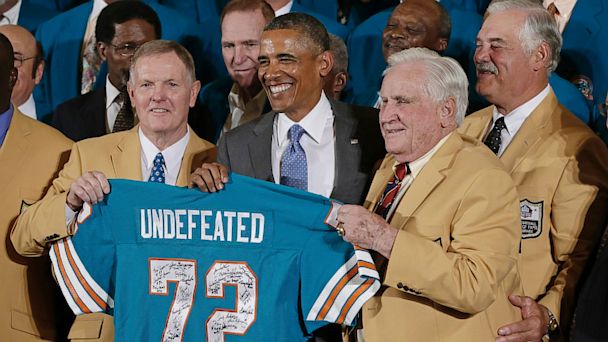
It’s the dream of every player, coach, owner and fan to witness their team go undefeated and lift the Lombardi Trophy after a perfect season. However, one of the greatest characteristics of the National Football League—its parity—is the reason the fleeting dream is so rarely realized. The only evidence necessary to see the truth in the difficulty of achieving a perfect season is the fact only one team has done it. We’re talking no losses and no ties — including playoffs. The 1972 Miami Dolphins remain able to crack open the champagne bottles every year to celebrate their distinct achievement, although several teams before and after that Dolphins team have so nearly joined them in the most elite group in football’s history.
The Only Perfect Season
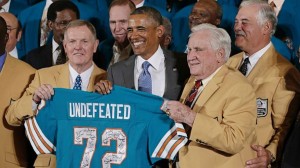
Under the great Don Shula, the ’72 Dolphins achieved immortality by obtaining a perfect 14-0 in the regular season before defeating the Browns, Steelers and Redskins in the playoffs to finish 17-0-0. Although they boasted the NFL’s top-ranked offense by scoring an average of 27.5 points per game, the Dolphins’ defense carried the team through the playoffs. Miami never scored more than 21 points in a postseason game, but their opponents were held to 17 points or fewer thanks to the top-ranked defense in the league, which averaged 12.2 points allowed per game. The prowess of the Dolphins’ 4-3 defense was obvious in the Superbowl, where it held the NFC Champion Redskins to just seven points.
Read the rest of this entry →
Tags: FootballNFLsports historyundefeated
Category
Football, Scott Huntington, Sports History
Posted on
April 23, 2014 by
Danielle Ward

Thanks to instant replay will baseball arguments soon be a thing of the past?
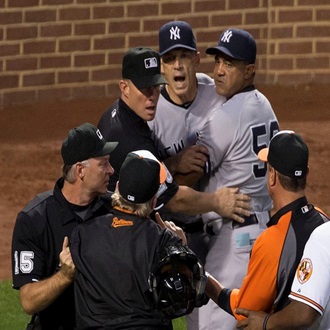
A baseball manager is having a meltdown and starts yelling before he even leaves the dugout. He leaps onto the field, gesturing wildly, and strides across the field until his face is inches away from the ump’s. He may toss his hat in disgust, shout some expletives and get thrown out of the game. The manager meltdown is a revered baseball tradition, but instant replay could be taking it away.
In addition to using pure gut instinct to decide whether to ask for an instant replay, managers have to know which plays are the most statistically important. They don’t want to burn up their single replay on an unimportant play. Fans who love to bet on baseball will be watching just how well managers handle their instant replay strategies. It’s something that could recharge the game, just like many changes from the past have done.
Of course, baseball isn’t a sport whose fans thrive on change. Additions like gloves, batting helmets and numbered uniforms, at one time, were enough to initiate some serious fan meltdowns. Let’s take a look back at how baseball has coped with big changes in the past. If the past is the best predictor of the future, instant replay will work out just fine. Read the rest of this entry →
Category
Baseball, Sports History
Posted on
April 23, 2014 by
Martin Banks
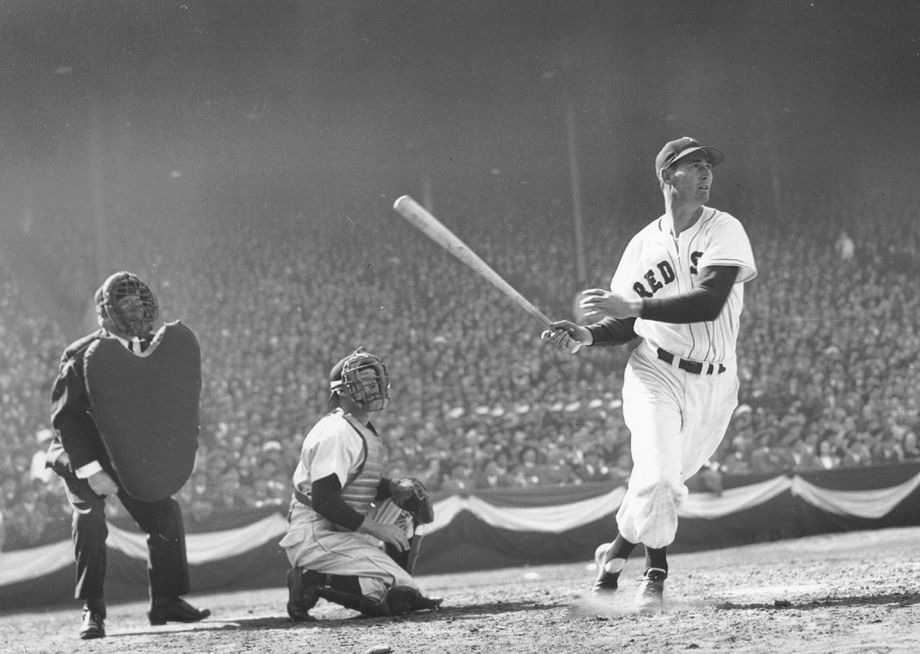
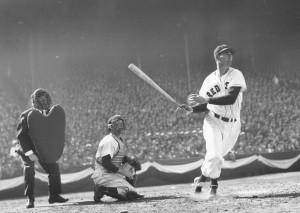
Before it became America’s pastime, before all of the performance-enhancing drugs, before the Babe, before the Big Red Machine, and even before the Yankees wore pinstripes, baseball began. Like many things that began long ago, the origins of the game of baseball are unclear. Although the puzzle may not be entirely complete, we certainly have plenty of pieces which show us the path that was taken to get to how baseball is played today. From its roots across the pond to the development of more modern rules, baseball’s genesis was not one simple event in sports history.
Rounders
Just as football developed from an alternative way to play rugby, baseball wasn’t created out of thin air. Instead, it came from an old English game known as “rounders”. Rounders was derived from the sport of cricket, but with some obvious differences, such as running in a more circular path rather than a straight back and forth one. As baseball’s ancestor, rounders lent its diamond shape to the modern game, as well as having a pitcher located within the diamond, though in rounders the pitcher is called the “bowler”. Read the rest of this entry →
Tags: Baseballhistory of baseballrounders
Category
Baseball, Scott Huntington, Sports History
Posted on
April 18, 2014 by
Martin Banks
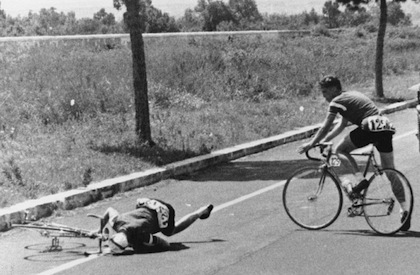
Just as modern medicine has evolved over the years, so too have performance-enhancing drugs. Although they have only come into the spotlight in recent times, the practice of using drugs to gain an advantage over an opponent is older than Rome. These days, the efforts of professional athletes to cheat has caused irreparable harm to the record books of some major sports, most notably Major League Baseball. So as we debate about whether or not steroid-users should get into the Hall of Fame, or what good the next policy will do regarding illegal substances, we should first look back at how performance-enhancing drugs have come this far.
Ancient Greece and Rome
The beginning of performance-enhancing drugs is almost the same as the beginning of organized sports. In ancient Greece, some of the earliest Olympians used abnormal substances in an attempt to gain a competitive advantage. Their drug of choice would either be plant seeds or extracts of mushrooms. Later in Rome, gladiators were known to have turned to drugs. It’s difficult to blame them, but gladiators would dope for various reasons, from dulling pain to creating a bloodier spectacle for viewers.
The Dangerous History of Performance-Enhancing Drugs
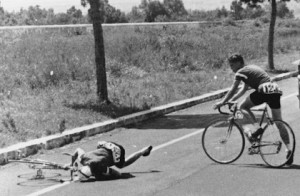
While cheating and gaining an unfair advantage are terrible actions for an athlete to take, the worst aspect of performance-enhancing drugs is that they can cause extreme harm to the user. Read the rest of this entry →
Tags: cyclingPEDsPerformance Enhancing DrugsRay Lewis
Category
Scott Huntington, Sports History
Posted on
April 18, 2014 by
Martin Banks
Earlier this week marked the 25th anniversary of the worst stadium-related disaster in English sports. On April 15, 1989, the Hillsborough Stadium disaster occurred during an FA Cup semi-final match between Nottingham Forest and Liverpool at Sheffield Wednesday’s Hillsborough Stadium. The disaster resulted in the deaths of 96 people, who were honored at a ceremony at Anfield Stadium, the home of Liverpool Football Club. While Liverpool currently sits atop the English Premier League, this week serves as a period to remember the 96 people lost at Hillsborough Stadium 25 years ago.

The Tragedy
25 years ago, the FA committee selected Hillsborough Stadium as the neutral site for the FA Cup semi-final match between Liverpool and Nottingham Forest. At that time, most English stadiums included high, steel fencing around the pitch in order to prohibit any rushing of the pitch, either friendly or hostile. Standing room for supporters was provided just beyond the fence. On the day of the disaster, only one terminal was opened for Liverpool fans to enter through, as a precaution to keep them separated from the Nottingham Forest fans. Massive overcrowding made the open terminal dangerous to both those who were attempting to get into the match and those who were being turned back for not having a ticket. In order to avoid injuries in the original entryway, police decided to open an exit gate that was designed to service departing fans.
The exit gate led to a narrow pathway to which fans flocked when it opened. Unfortunately for many fans, the narrow pathway led to the steel fence. As thousands of fans entered, many of them were pressed up against one another and a human crush formed. The police that were supposed to be stationed at the entrance of the gate should have cut off the flow of fans and direct them to another way in, but there were no policemen stationed outside the gate for unknown reasons.
Read the rest of this entry →
Tags: Hillsborough stadium disasterliverpoolsoccer
Category
Scott Huntington, soccer, Sports History