Have you ever wanted to watch a baseball highlight without going on MLB.com and trying to navigate their ridiculous video section? Well that might not be a problem any longer. Major League Baseball has finally lifted its ban of Major League clips on YouTube. As every other sports league was easily accessible worldwide, the tyranny of Bud Selig wouldn’t allow even a 30 second clip of an MLB game. Now MLB has finally joined the 21st century and has posted full game videos of classic games, and have eased their ban on others posting MLB videos.
One of the best full games MLB had posted thus far is the 1999 all-star game at Fenway Park.
Every Red Sox fan remembers this classic!! Ted Williams is comes out of Center field waving his hat to the crowd, and even the players are in awe of the greatest hitter that ever lived. The when the actually starts, Pedro Martinez strikes out 5 of the 6 batters he faces.
If you have 5 hours to kill, you can always watch game 5 of the 2004 ALCS
And you can even follow it up by watching the Red Sox win their first World Series in 86 years!
http://www.youtube.com/watch?v=1WIclwwPjm4
Although the MLB YouTube channel isn’t spectacular, its a start for the league. The NBA, NHL, and even European Football have been big commodities on YouTube, and people all over the world now have the opportunity to follow teams without paying with a limb for an MLB subscription
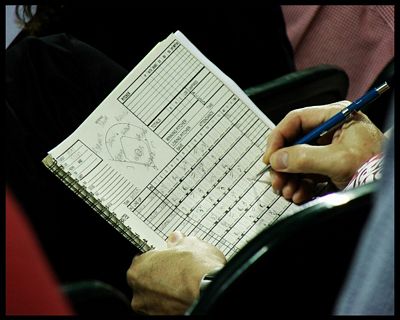
Scorekeeping is an art and everybody has their own way of doing it. I’ve created a scorecard that tracks everything you could ask for, making it easy for you to keep track of your team. The scorebook was developed to accommodate a wide variety of baseball statistics, all of which are conveniently placed on one page.
The Touch ‘Em All Baseball Scorebook is for everyone and anyone, and can be used at any level for baseball or softball. The 11 spots in the batting order and room for 11 innings prepares you for innings or games that may go longer than expected. Whether you’re a fan at home watching on television or you’re at a little league game, this scorebook is the one to use.
Features:
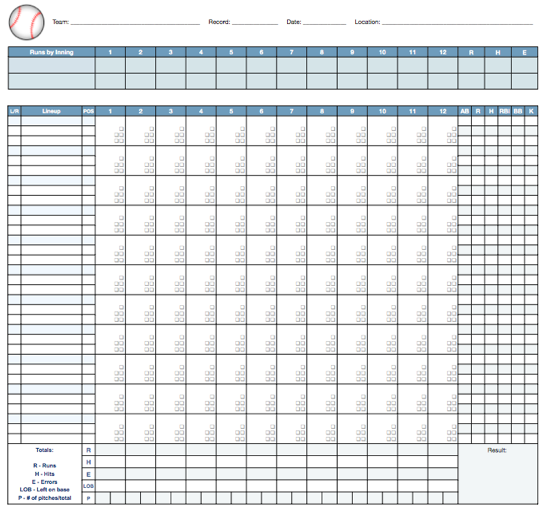
11 innings – for games that go longer than planned
11 batting slots – comes in handy when a team goes around the order or if you need more than the usual nine slots
40 lineup cards (one for each scoresheet)
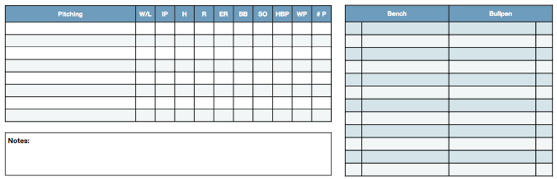
Pitching stats – includes a chart for a maximum of eight pitchers per team
Hitting stats – allows you to add up and total each batter’s offensive stats
Pitch counts – not only track pitches thrown to every batter, but track the pitch count as well
Runs by inning – a simple chart that allows you to recall when runs were scored during the game
Bench and bullpen slots – list players on the bench and in the bullpen, allowing you to see which players each team has yet to use. As they enter the game, simply cross out their name to stay updated.
A box for notes – use it for anything you’d like
Here’s a screenshot of what it looks like:
The scorebook even includes a full schedule page and a roster page with contact information. Of course you don’t have to use everything, but it is there if you need it.
The scorebook also includes instructions for how to keep score, in the event that you are unfamiliar with how it works. There is a page that explains how to do it and shows you examples for those that prefer visuals to learn.
The scorebook contains 40 scoresheets, so you can track 20 games (if you track both teams) or 40 games (if you track one team).
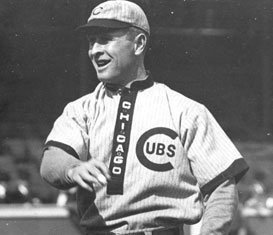
The Sports Then and Now Vintage Athlete of the Month is a former Chicago Cubs player and manager who is best remembered as part of a sports trio forever immortalized in verse.
Known as “The Peerless Leader”, Frank Chance was not only the starting first baseman for the Chicago Cubs, but as their manager he led the team to four World Series appearances between 1906 and 1910. Read the rest of this entry →
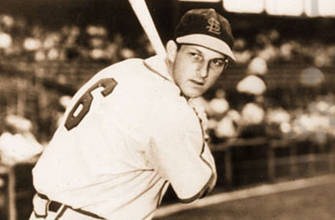
Stan Musial joined the Cardinals in 1941 and was named an All-Star 20 times during his career.
The history of baseball is filled with legendary figures from Cobb, Ruth, DiMaggio and Williams to Aaron, Mays, Clemente and Griffey. One baseball legend who transcended generations was the great Stan “The Man” Musial, who passed away Saturday at the age of 92.
Musial made his debut during the magical 1941 season, which seems fitting for a player who would become an all-time great.
In the months before Pearl Harbor and America’s entrance into World War II, the country was fixated on baseball and captivated by a pair of stars who were doing magical things with a bat.
Joe DiMaggio of the New York Yankees parlayed a record 56-game hitting streak into the MVP season. Ted Williams “The Splendid Splinter” ran away with baseball’s batting crown with a .406 average. No one could have predicted that more than 70 years later both records would remain unmatched across the annals of baseball.
Musial’s major league debut came in the second game of a doubleheader on September 17, 1941. He got two hits as the Cardinals defeated the Boston Braves 3-2.
That debut occurred barely a year after it was feared Musial’s career might be over before it started. Originally signed from his hometown of Denora, Pennsylvania as a pitcher and outfielder, Musial was playing for Daytona in the Florida State League when he jammed his left shoulder diving for a ball and was no longer able to pitch. However, little more than a year later he was thrust into a playoff race as a late-season call-up of the Cardinals.
When Musial made his debut, the Cardinals were on their way to an impressive 97-56 record, but were a game behind the first place Brooklyn Dodgers. They were 7-5 in the final 12 games, with Musial playing in all 12, and ended the season 2.5 games behind the Dodgers and their 100-54 record. Read the rest of this entry →
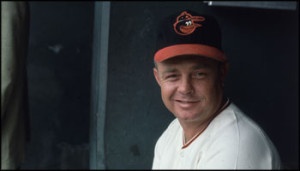
Earl Weaver won 1,480 games in 17 seasons managing the Baltimore Orioles.
The baseball world has lost one of its great characters with the passing of former Baltimore Orioles manager Earl Weaver at the age of 82.
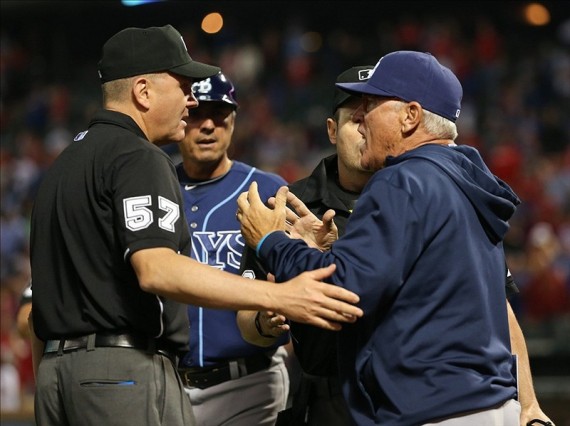
A fiery manager whose legendary arguments with umpires led to nearly a hundred ejections during his career, Weaver was the leader of baseball’s most consistent team from the late 1960s through the mid 1980s.
Weaver spent nearly 20 years as a minor league player and manager before joining the Baltimore Orioles as their first base coach in 1968.
Less than four months later with the Orioles struggling, Weaver replaced Hank Bauer as manager and the rest was history. The Orioles went 48-34 over the rest of the 1968 season and the next year won 109 games and reached the World Series.
After losing the 1969 World Series to the Mets, the O’s would not be denied the following year as they went 108-54 and defeated the Cincinnati Reds in five games to win the second World Series in team history.
Baltimore won more than 100 games for the third straight year in 1971, but for the second time in three years dropped the World Series to an underdog opponent with a seven game loss to the Pittsburgh Pirates.
After falling back with an 80-74 record and third place finish in 1972, the Orioles rebounded with consecutive division titles in 1973 and 1974. They finished second in the division three straight years before placing fourth in 1978 despite winning 90 games. Read the rest of this entry →