Analysis. History. Perspective.

Sports Then and Now


Archive for the ‘Baseball’


The Worst Class In Baseball Hall of Fame History? Comments Off on The Worst Class In Baseball Hall of Fame History?
Posted on January 08, 2013 by Dean Hybl
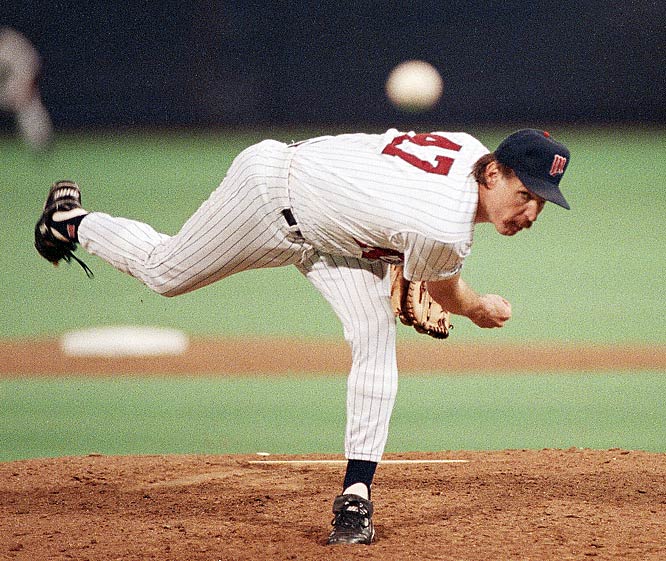
In his 14th year on the ballot, Jack Morris will try to finally earn a spot in the Baseball Hall of Fame.

In his 14th year on the ballot, Jack Morris will try to finally earn a spot in the Baseball Hall of Fame.

When the Baseball Hall of Fame announces its 2013 Induction Class on January 9th it is legitimately possible that not a single player will receive the 75% of the votes needed to gain entry. That would seemingly make the class of 2013 arguably the worst in the history of the Hall of Fame.

Funny thing is, if it were not for the steroid controversy that surrounds many of the eligible players, the class of 2013 would likely go down as the greatest since the initial Hall of Fame Class in 1936.

The baseball record books are littered with the names of players eligible for the Hall of Fame in 2013.

From first time candidates Roger Clemens, Barry Bonds, Mike Piazza, Craig Biggio, Sammy Sosa and Curt Schilling to holdovers Mark McGwire, Rafael Palmeiro and Jeff Bagwell, the list of players with seemingly Hall of Fame worthy statistics on the ballot is amazing. And that list doesn’t even include long-time candidates Jack Morris, Fred McGriff, Tim Raines and Lee Smith, who all posted careers that are at-least close to being considered Hall of Fame worthy.

Unfortunately, because many of the players listed above have been tainted by steroids and those that haven’t been actually implemented have suffered from guilt by era, which players will actually receive enough votes to get into the Hall of Fame is anyone’s guess. Read the rest of this entry →
Remembering the Great Roberto Clemente 40 Years After His Untimely Death 1

Posted on January 01, 2013 by Dean Hybl
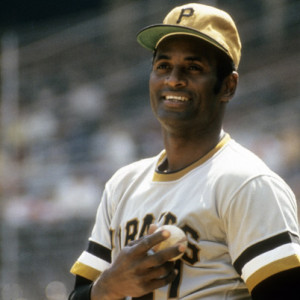
Roberto Clemente was a legend on and off the baseball field.

Roberto Clemente was a legend on and off the baseball field.

It was 40 years ago this New Year’s morning that sports fans woke up to the shocking news that one of baseball’s greatest stars had lost his life trying to bring relief to others.

Roberto Clemente was not only a national hero in Puerto Rico, but after 18 years and two World Series Championships had become a favorite among sports fans in Pittsburgh.

On September 30, 1972, the 38-year-old Clemente became just the 10th player in Major League Baseball history to reach the prestigious 3,000 hit mark. He then hit .235 as the Pirates lost the National League Championship Series in five games to the Cincinnati Reds.

No one could have imagined that less than three months later this baseball legend would be lost in a tragic accident.

The events that led to Clemente’s death started on December 23rd when a massive earthquake hit Managua, the capital city of Nicaragua. Clemente had been in the country just three weeks earlier conducting baseball camps and was determined to lend a hand. He organized three flights of aid packages, but soon learned that all three planes had been diverted by corrupt officials of the Somoza government and had not reached the victims.

He then coordinated a fourth flight and was going to accompany that flight to ensure that it reached those impacted by the earthquake. Unfortunately, the plane that he chartered for the New Year’s Eve flight was a Douglas DC-7 that had a history of mechanical problems.   Read the rest of this entry →

Calls To The Hall: The Morals Of Cooperstown 5

Posted on November 29, 2012 by Rick Swanson

When it comes to electing the upcoming class into the baseball Hall of Fame, we are going to either change the record books or let in everybody that cheated.

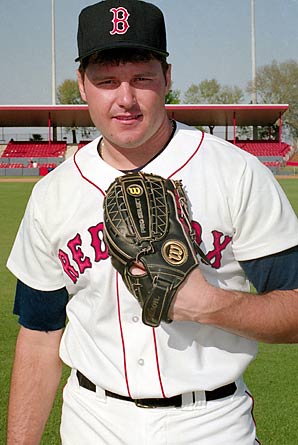
The fact that Roger Clemens is up for nomination is going to cause us to see who really gets in and who is left outside looking in with Pete Rose.

Watching Clemens when he was in New Britain, CT in 1983, there was talent on the mound, that had Cooperstown in my mind instantaneously.

That day when he threw a shutout to win the Eastern League Championship, I said “someday I will see him win the World Series for Boston.” When I went to Game Six in 1986, my dream was close to coming true.

He won 192 games in a Red Sox uniform and nobody has worn his number 21 since he left for Toronto in 1997.

The greatest pitcher in Red Sox history, and he threw it all away for a syringe a decade later

How could using PED’s in the 1995-2007 era be any different than those that used greenies from the 50’s until 2011?

We let Gaylord Perry in the HOF and he admits he cheated from day one.

Craig Nettles even had super balls come out of his bat, and how many times has cork been found inside one?

Cap Anson might have been the biggest bigot of his era, and he kept color out of baseball for 64 years, but baseball let him into Cooperstown.

Tom Yawkey did not have a man with color on his team until Pumpsie Green a decade after Jackie Robinson, but he too is enshrined.

Read the rest of this entry →

GM’s Have Much To Discuss At Baseball’s Winter Meetings In Nashville Comments Off on GM’s Have Much To Discuss At Baseball’s Winter Meetings In Nashville

Posted on November 26, 2012 by Rick Swanson

Besides Hot Stove banter there is much that can be discussed at next week’s GM Meetings in Nashville, TN

With the MLB Winter Meetings in Nashville rapidly approaching, here a few meetings that Bud and his crew should schedule.

The first meeting should be with Bud and every team in the American League. In 2013 there will be 15 teams in the AL, and we need to take a new vote on the DH. Lets say that Houston will vote to eliminate the DH since they never had one. Do you think there are seven other teams that would vote the same way?

The next meeting should be regarding the new schedule.

It might be too late to scrap the model adopted by baseball and change to a more balanced schedule in 2013, but it certainly is early enough to start on the 2014 schedule.

In 2013 each team will play 19 divisional games and 20 interleague games with six teams.

In 2014 a balanced schedule would have each team play 18 divisional games and 20 interleague games with five teams. Eliminating rivalry games every year, will allow baseball to rotate a complete division with all teams playing in every park every three years.

Balanced schedule:

72 Interdivisional – four teams 18 games each
70 same league- ten teams seven games each
20 interleague- one complete five team division four games each

The next meeting will be called Wild Card improvements.

The first thing should be to change the Wild Card Game into a series, WCS. Changing it into a three game series will make it more exciting for fans, and each team will have at least one home game.

Rules for tie breakers also needs modifying. If both teams qualify for post season, then they should never play a game in which the losing team advances, like what would have happened this past season if the Yankees and Baltimore tied.

The next meeting will be called instant replay.

Here is the proposal.

Each team will be allowed three wrong challenges per game.

Each team will have a red ball that would signify a challenge. When a team throws the challenge ball across the foul line, a challenge will start.

The challenge must be made within five seconds of the original call by any umpire. Any umpire call, except balls and strikes could be challenged

After the red ball crosses the line, the four umpires will have 30 seconds to watch replays while staying on the field, using the giant screen in every park.

After 30 seconds each umpire will signal their call. If the result is 2-2 then the original call stands.

All replays will be shown in every park, including balls and strikes.

Umpire Strikezone Scores will be included in every boxscore.

The next meeting will be for rule changes.

Read the rest of this entry →

How to Improve the Game of Baseball in an Instant Comments Off on How to Improve the Game of Baseball in an Instant

Posted on November 25, 2012 by Rick Swanson


Executive VP of Baseball Operations argues that instant replay would slow down the game of baseball.

Joe Torre was recently quoted saying this about instant replay: “The thing is our game is a little unique. There’s not a lot of time stoppage, so to make sure that if we do implement replay … you’re [not] going to slow this game down and you’re going to upset the rhythm of the game.”

The only way for instant replay to work if it is done in an instant.

Baseball has never used a clock in the game but if they use it for instant replay, it would really speed up the game.

If each replay was limited to 30 seconds and if each team only had two challenges per game, the game would only be increased by a minute or two at the most.

No more arguing with the umpire. If the manager has to toss out a red ball across the foul line to signify a challenge he won’t waste time getting all upset with any umpire again.

The way to make this work, is to only give the manager five seconds to decide if he wants to use up a challenge.

After five seconds if the red ball is not tossed across the white lines, then everyone gets to see all the replays.

There is no need to stop showing them in the park, because the manager did not object, so why should fans be upset if the call was bad or not?

The burden now lies with each team, to decide if they want to dispute any call.

If each team has only two challenges a game only two minutes would be added to the game. (If the team wins both challenges they would continue until getting one wrong.)

This only works if the umpires stay on the field, and watch the giant screen with all in the park at the same time.

After 30 seconds all four umpires would give their decision one at a time. If the verdict is tied two and two, then the one who made the original call gets to decide.

The technology is available on every big screen in every park in MLB.

Why can’t everyone look at the same play again?

Why is baseball afraid to show replays on big screens in every park?

Fans would be able to watch along on the big screen while umpires decided the fate of their call.

All every fan wants to see every call be correct. Nobody wants to see a perfect game erased, because of a bad call by an umpire.

Baseball and instant replay were meant for each other, but as stated earlier the key word is instant.

Next we need to show every pitch to everyone in the park, to make the umpires follow the rules of the sport.

Baseball: The Timeless Sport With A Clock Comments Off on Baseball: The Timeless Sport With A Clock

Posted on November 24, 2012 by Rick Swanson

If baseball is going to use a challenge rule with instant replay, the best place to find guidelines is with tennis.

Since 2006 the electric line call, known as the “Chase Review” has been used at the US Open.

Tennis has tried electronic line calling since 1974, but since 2006 the technology has been created by a system known in tennis as the hawk eye system.

Each player is allowed three incorrect challenges per set.

The average length of a challenge is about ten seconds.

In tennis, everyone in the stands is allowed to see the review and then the call stands.

In baseball we should use the hawkeye cameras to follow the ball at all times.

We also need to let everyone in the park see the hawkeye instant replays.

The amount of challenges is something that baseball is going to need to decide.

If we put it at three wrong challenges per game, will teams use it too often?

Since you have only five seconds to decide whether to challenge a call, then we need an official clock in each park.

If baseball started using a clock, we could also shorten the length of the games.

If we had a clock for replays, then we would have a clock to follow MLB rule 8.04, which reads:

Rule 8.04  When the bases are unoccupied, the pitcher shall deliver the ball to the batter within 12 seconds after he receives the ball. Each time the pitcher delays the game by violating this rule, the umpire shall call “Ball.” The 12-second timing starts when the pitcher is in possession of the ball and the batter is in the box, alert to the pitcher. The timing stops when the pitcher releases the ball.

The intent of this rule is to avoid unnecessary delays.

A clock would be used for replays set at 30 seconds. A clock would be used for challenges at five seconds, and a clock would be used for pitchers rule 8.04 at 12 seconds.

We could even use the clock for the time spent between innings. Cut it down to 90 seconds, and we could cut another 18 minutes off the entire length of a game.

Baseball has prided itself as a timeless sport, but as we move into the future, a clock will be the new innovation we will use for the good of the game.

  • Post Categories


↑ Top