Analysis. History. Perspective.

Sports Then and Now


Archive for the ‘Sports History’


The History of Fantasy Football 38

Posted on February 04, 2014 by Martin Banks

Since the explosion of fantasy football into modern sports culture, it’s hard to imagine a time when Sundays during football season weren’t accompanied by millions of people constantly checking their lineups. Young or old, man or woman, it seems like almost every football fan is involved in a fantasy league come kickoff each NFL season. Since the very first fantasy football draft in downtown Oakland, fantasy football has grown far more than the game’s inventor could ever had imagined.

fant-foot

The Beginning

As a branch off from a fantasy golf system, fantasy football was the invented in a bar called the Lamppost by a limited owner of the Oakland Raiders and businessman Bill Winkenbach. In his home, Winkenbach and seven other men held the inaugural draft in 1963 for their league, the Greater Oakland Professional Pigskin Prognosticators League, or GOPPPL.

With the scoring based solely on touchdowns, the GOPPPL began with each roster consisting of two quarterbacks, four halfbacks, two fullbacks, four offensive ends, two returners, two kickers and four defenders. As the very first fantasy football selection, George Blanda was chosen by Andrew Mousalimas in the now 50-year-old league.

How The Game Has Changed

From players to league sizes to scoring and more, fantasy football has drastically changed over its lifespan. For starters, the number of participants has grown from the original eight to an estimated 24 million. The greatest change of all to the game—the internet–helped the game gain incredible popularity and encouraged a number of modifications. Instead of the one league in Oakland, there are now countless leagues on countless websites, including ESPN, Yahoo, NFL and CBS to name the most prominent.

Although the prize for the winner of any fantasy league—money–has remained roughly the same, the consequence for the loser has evolved from the original football with a dunce cap on it, called the Dunce Trophy, to anything from buying the winner dinner to carrying out embarrassing chores to even getting a tattoo of the winner’s choosing.

A far cry from the GOPPPL having to get statistics and research from one magazine, fantasy football owners can now rely on websites and programs, like Scout Pro Fantasy Football Software. Sites like Scout Pro provide readers with player analysis, rankings, fantasy tools and more. Software from Scout Pro can even take stats and expert analysis and create fantasy point predictions that can be customized to fit the website that you play on.

By The Numbers

As a whole, fantasy sports are estimated to now have an economic impact of more than $2 billion a year. Of the estimated 32 million fantasy sports players, over 75 percent are from fantasy football. Some fantasy football leagues have buy-ins of up to $10,000 while others are completely free.

For fantasy football, committed owners are estimated to spend an average of nine to 12 hours per week on their respective teams. Although men dominate the fantasy sports landscape, an estimated 20 percent of participants are women.

Thanks to a few men in an Oakland bar, watching football has been forever changed. The game of fantasy football continues to grow, and its 50-year history doesn’t appear to be coming to an end any time soon.
The Legend of George Gipp 9

Posted on February 03, 2014 by Martin Banks

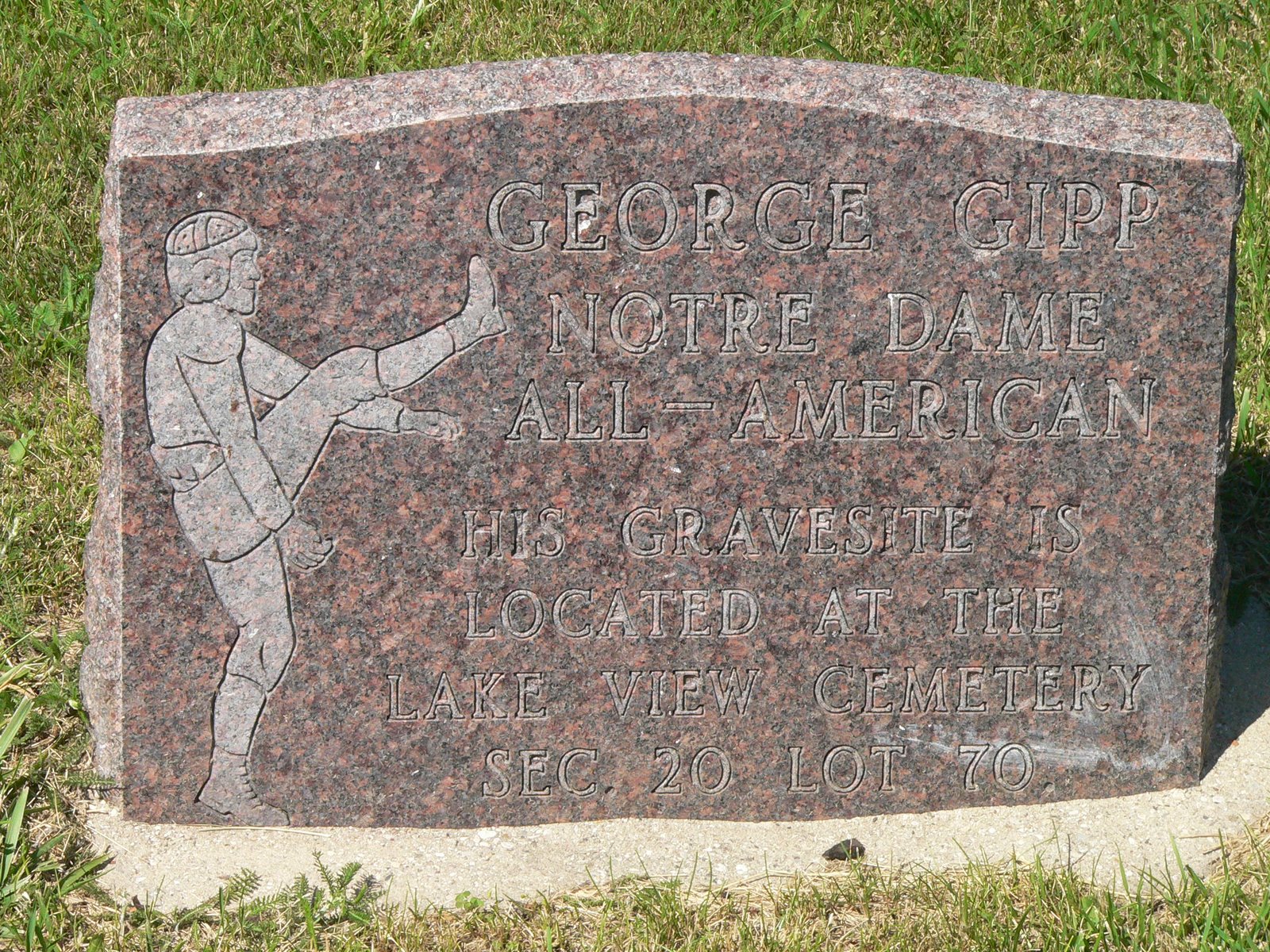
Many American sports fans are aware of the legend of George Gipp, as it has risen to almost mythological heights. Gipp was one of the best college football players of all time, but is best known because of the phrase “win one for the Gipper,” which was popularized in a film about Coach Knute Rockne’s life.

Gipp

Gipp died shortly after playing his final football game, but Rockne used this death to motivate his team before a game seven years later. Because this speech became so famous, Gipp’s legacy has lived on. Today, Gipp is a legendary figure, although we might never know the exact truth behind his life since he died so long ago and lived a very secretive life.

About George Gipp

Although he originally attended Notre Dame to play baseball, legendary coach Rockne convinced George Gipp to join the school’s football team. Gipp went on to lead the Fighting Irish in rushing and passing in 1918, 1919 and 1920, earning All-American honors in the process. Gipp is recognized as one of the best athletes in the history of college football and still holds numerous school records.

Read the rest of this entry →

Counting Down the 50 Greatest Individual Offensive Performances in Super Bowl History: 50-26 2

Posted on January 26, 2014 by Dean Hybl
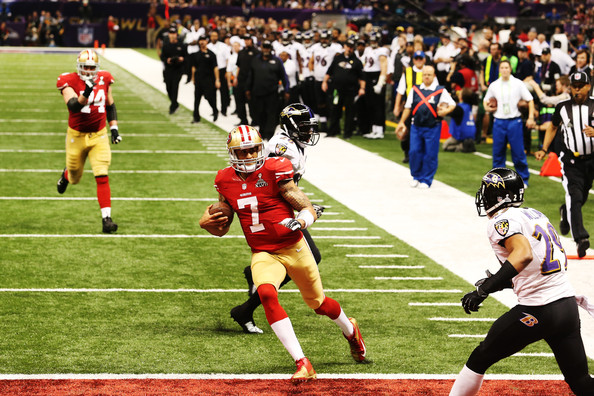
Despite losing Super Bowl XLVII to the Baltimore Ravens, Colin Kaepernick still had one of the finest performances in Super Bowl history.

Despite losing Super Bowl XLVII to the Baltimore Ravens, Colin Kaepernick still had one of the finest performances in Super Bowl history.

Since Super Bowl I in 1967, the “big game” has become the premier stage for NFL players to either create or cement their legacy. The first 47 Super Bowls are full of special Super Bowl performances. Some were by familiar names that used the Super Bowl to either put a stamp on a Hall of Fame career or propel them into a spot in Canton. But not every Super Bowl hero was a household name before their performance on the big stage. There have been several players whose otherwise unspectacular career includes one shining performance in front of one of the largest television crowds of all-time.

In this article and the second part (which will be posted later this week), we are looking specifically at the 50 best individual performances on offense in a Super Bowl. This list includes only offensive performances and not kickers or special teams players.

To develop the list we did take into account game statistics, but also looked at game situations when analyzing which players and moments were worthy of inclusion. For example, though Joe Montana tossed five touchdowns as the 49ers routed Denver in Super Bowl XXIV, he actually was ranked higher in other Super Bowls because his performance in critical moments was instrumental to their victory.

In ranking performances whether the team won the game was considered, but there have been some Super Bowl performances by players on losing teams that were clearly among the most important. One thing that received little consideration was who was awarded the Super Bowl MVP as there have been numerous occasions when the MVP award has gone to someone other than the player who seemingly provided the best performance.

So below is a countdown of performances 50-26.

50. Colin Kaepernick – San Francisco 49ers – Super Bowl XLVII – 16-28, 302 yards, 1 TD, 1 INT, 7 rushes, 62 yards, 1 TD
If he has been able to lead the 49ers to a final touchdown and victory over the Baltimore Ravens, Kaepernick’s performance in his first Super Bowl would have certainly been higher on the list. However, even in defeat the first year starter led his team to a near-comeback victory using both his arm and feet.

49. Mark Rypien – Washington Redskins – Super Bowl XXVI – 18-33, 292 yards, 2 TD, 1 INT
Utilizing a talented receiving corps that included Art Monk, Gary Clark and Ricky Sanders, Rypien picked apart the Buffalo Bills with a pair of touchdown passes and time consuming drives to lift the Redskins to their third Super Bowl in a decade (all with a different starting quarterback).

48. Kurt Warner – Arizona Cardinals – Super Bowl XLIII – 31-43, 377 yards, 3 TD, 1 INT
For a fleeting moment, it appeared that Kurt Warner was going to be the first quarterback to lead two different franchises to Super Bowl victory. He and the Cardinals played well enough to win, but a late Pittsburgh drive denied them of victory. Interestingly enough, Warner holds the record for the top three passing yardage totals in Super Bowl history with his 377 yards in Super Bowl XLIII ranking second.

47. Rod Smith – Denver Broncos – Super Bowl XXXIII – 5 rec., 152 yards, 1 TD
While Terrell Davis and John Elway are the best remembered offensive players from their back-to-back Super Bowl wins, receiver Rod Smith also played an important role in their win over the Falcons. His 80-yard reception in the second quarter helped break the game open and he finished with 152 receiving yards.

46. Michael Pittman – Tampa Bay Buccaneers – Super Bowl XXXVI – 29 rushes, 124 yards, 0 TD
While the defense garnered all the headlines during the Buccaneers victory over the Raiders, Michael Pittman was the workhorse for the offense. He rushed for 124 yards, including 75 in the first half as the Buccaneers established control of the contest. Read the rest of this entry →

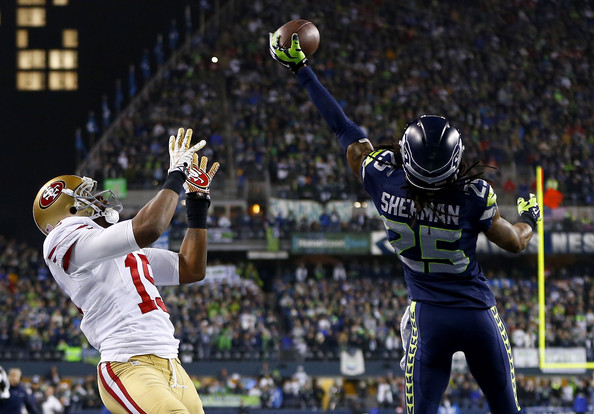
Richard Sherman is a Loudmouth, But Not an Original 4

Posted on January 20, 2014 by Dean Hybl
It might have been better if Richard Sherman had let his play on the field do all his talking.

It might have been better if Richard Sherman had let his play on the field do all his talking.

Much was made on social media of the unsportsmanlike display of Seattle Seahawks defensive back Richard Sherman after he made a game-saving play in the final seconds of the NFC Championship Game between Seattle and the San Francisco 49ers.

While there is no question that Sherman’s gestures and trash talking at the end of the game were certainly un-called for and slightly diminish the greatness of his play, they are in no way original.

In fact, loud-mouthed defensive backs playing in the Super Bowl dates back to the very first NFL-AFL Championship Game when Kansas City Chiefs defensive back Fred “the Hammer” Williamson garnered headlines for his boasts about how he would handle the receivers for the NFL Champion Green Bay Packers.

“Two hammers to (Boyd) Dowler, one to (Carroll) Dale should be enough,” Williamson claimed.

Interestingly, Williamson and Sherman actually have more in common than just their bravado.

Both players attended schools known more for their academics than their football, Williamson at Northwestern and Sherman at Stanford.

They also were both lightly regarded coming into the NFL.

Williamson was an undrafted free agent and originally signed with the Pittsburgh Steelers. After spending one season in Pittsburgh, Williamson developed into an All-AFL defensive back during four seasons with the Oakland Raiders. He then moved to Kansas City where he ultimately played three seasons. Read the rest of this entry →

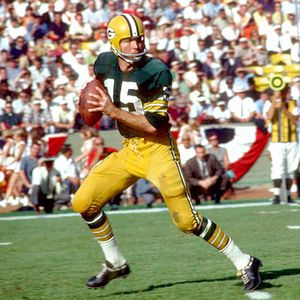
Bart Starr: NFL’s Ultimate Champion 3

Posted on January 20, 2014 by Dean Hybl

The January Sports Then and Now Vintage Athlete of the Month was the MVP of the first two Super Bowls and is the only quarterback to lead his team to five NFL Championships.

After quarterbacking the Alabama Crimson Tide to an 0-10 record in 1955 and then being drafted in the 17th round of the 1956 NFL Draft, few would have predicted that Bart Starr would become known as one of the greatest winners in NFL history. Read the rest of this entry →

Cooperstown Will Have Many New Members in 2014 5

Posted on January 05, 2014 by Dean Hybl
Greg Maddux could become the first unanimous selection to the Baseball Hall of fame.

Greg Maddux could become the first unanimous selection to the Baseball Hall of fame.

After no modern candidates were selected for the Baseball Hall of Fame in 2013, Cooperstown should have a slew of new additions in 2014.

They are already guaranteed of three quality inductees as former major league managers Bobby Cox, Tony LaRussa and Joe Torre have already been announced as members of the Class of 2014.

Now on Wednesday we should see at least two, and likely more, modern era players earn baseball immortality.

If the baseball writers who vote for the Hall of Fame weren’t so self-righteous, the Class of 2014 might include the first unanimous selection in Hall of Fame history.

Any writer who believes he can legitimately justify leaving Greg Maddux off his Hall of Fame ballot should be immediately awarded a Pulitzer Prize, though it would be more a work of fiction than of fact.

During his 20 year career, Maddux won 355 games, including 17 straight seasons with at least 15 wins, four Cy Young Awards and posted a career ERA of 3.16 despite playing primarily during an era when many hitters were using Performance Enhancing Drugs (PEDs).

If that isn’t enough to justify Hall of Fame induction, consider that Maddux won 18 Gold Glove awards as the top fielding pitcher. His total eclipsed the previous record of 16 Gold Gloves set by third baseman Brooks Robinson and matched by pitcher Jim Kaat.

While Maddux is a Hall of Fame lock, his longtime teammate Tom Glavine might have a little tougher time getting in during his first year of eligibility.

Interestingly, Glavine had more 20+ win seasons (5) than Maddux (2), but finished with fewer wins (305) and a higher ERA (3.54). Glavine was a two-time Cy Young winner and teamed with Maddux and John Smoltz to form one of the greatest starting pitching trios in baseball history. Read the rest of this entry →

  • Post Categories


↑ Top