Posted on
March 11, 2014 by
Martin Banks
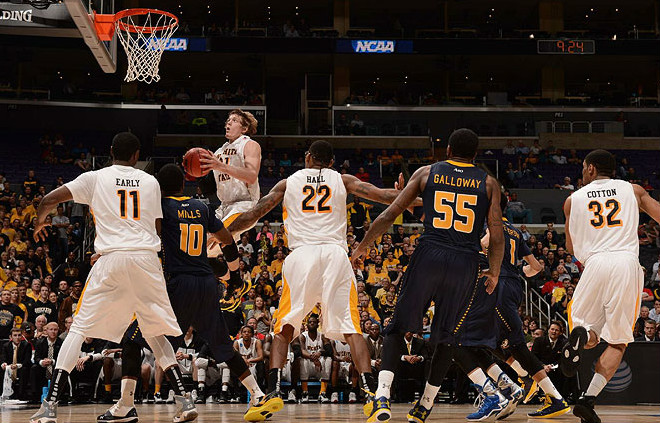
As one of the stories of the year, the Wichita State Shockers have gone undefeated in the regular season of their college basketball season. After making it to the Final Four the NCAA Men’s Basketball Tournament last year and earning a record of 34-0 this season, the Wichita St. basketball team is now where they have rarely been—in the limelight of sports prominence. For the casual sports fan, the Shockers have not often come to mind when it comes to choosing a winner for their March Madness brackets. However, Wichita St. basketball has come a long way since its beginning, starting under the name Fairmount College.
The Beginning of Shockers Basketball
Under the original name of the “Wheatshockers”, the Fairmount College basketball team competed in its first season in 1906. Head coach Willis Bates and his six players finished the season 2-4. You don’t need medical translation to know that going 2-4 isn’t the best start to a program, but Fairmount College would eventually make strides forward, including the development of the full-court zone press under Coach Gene Johnson.
[poll id=”264″]
Start of Success
The Shockers would begin to see success after joining the Missouri Valley Conference, when the school hired Ralph Miller from East High in 1951. Miller convinced his star player in high school, Cleo Littleton, to come with him to the college. Littleton became one of the first African-American players in the Missouri Valley Conference. He was also the first to score 19 points per game as a freshman—a school record that stands today. Under Miller in the 1964, Dave Stallworth would become the Shockers’ first consensus all-American, scoring a career average 24.2 points per game. Miller would later be inducted into Naismith Basketball Hall of Fame after building the Shockers’ basketball program.
Wichita State’s First Great Season
In the season following the school’s induction into the state university system as Wichita State University, the Shockers would go 19-7 and win the Missouri Valley Conference in the 1964-65 season under Gary Thompson. In the NCAA tournament of that season, Wichita St. would defeat SMU and Oklahoma St. in order to earn a berth into the Final Four—an accomplishment tied for the school’s deepest-ever run in the tournament. In their Final Four matchup, Wichita St. would lose to defending national champs UCLA Bruins by a score of 108-89.
One More Run Before Insignificance
11 years after Wichita St.’s greatest season at that point, the Shockers would win their next Missouri Valley Conference title. With one of the school’s best-assembled teams, including freshman-phenom Cheese Johnson, the 1975-76 Shockers returned to the NCAA tournament. A heart-breaking loss by one point to Michigan—the eventual runners-up—in the first game of the tournament would then be followed by the Shockers’ Elite 8 season in 1981 in which Wichita St. defeated Kansas. The Shockers would subsequently go through a period of mediocrity through the 1990s.
Return of the Shockers
Under new Athletic Director Jim Schaus, Wichita St. would begin to see success again in the 2000s. The hiring of coach Mark Turgeon would prove advantageous as he brought the team to three consecutive 20-win seasons and the school’s first conference championship in 23 years. The program has continued to gain momentum as the Shockers won the NIT tournament in 2011 and reached the Final Four of the NCAA tournament last season. Now, Wichita St. is poised to make a deep run in the tournament with the likelihood of a one seed and the confidence that only an undefeated season can give you.
Tags: College BasketballMarch MadnessNCAAShockersWichita State
Category
College Basketball, Scott Huntington, Sports History
Posted on
March 06, 2014 by
Martin Banks
LeBron James’ recent offensive performance scoring 61 points against the Charlotte Bobcats makes him the 64th player to score at least 60 points in NBA history. It seems almost impossible to beat that record, or to top James’ sheer brilliance of mixing skill with durability and consistency throughout a single game. However, five players have surpassed that feat and propelled themselves into one of the most exclusive groups in sports: the 70-point club.
Wilt Chamberlain
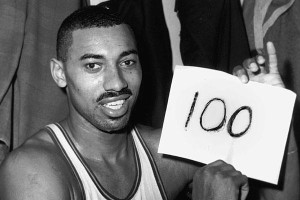
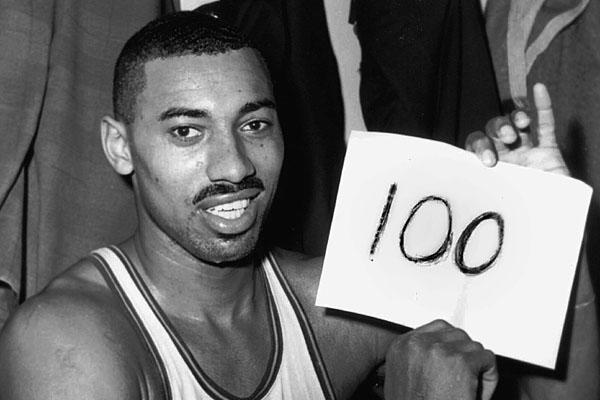
Without a doubt, the king of single-game scoring is Chamberlain. The Lakers legend scored at least 70 points in a single game six times, which is easily the most ever. Chamberlain also holds the overall record for points in a game, with 100 for the Philadelphia Warriors against the New York Knicks in a 169-147 victory in 1962. The 100-point performance shattered the previous record, which Chamberlain had set less than three months earlier, of 78 points. Perhaps the most impressive part of his 100-point record was the fact that Chamberlain made 28 of 32 free throws as a .511 free-throw percentage shooter. Chamberlain would also score 70, 72, and 73 points in NBA games.
Kobe Bryant
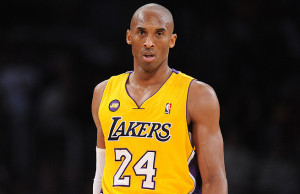
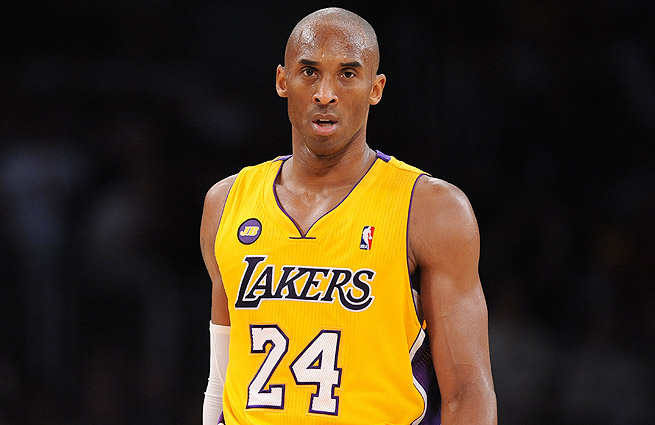
Another Lakers great scored the second most points in a single NBA game ever. Bryant was simply unstoppable in his 81-point performance that lifted the Lakers over the Toronto Raptors in 2006. On his own, Bryant outscored the entire Raptors team 55-41 in the second half. The Raptors would have needed a Columbia utility vehicle in order to stop Bryant in the final 24 minutes of that game. Bryant shot the ball relatively few times considering his 81 points. He made 28 of 46 from the floor and added 18 points via free throws. Read the rest of this entry →
Tags: 70 pointsBasketballhistoryLeBron JamesNBAsports history
Category
Basketball, NBA, Scott Huntington, Sports History
Posted on
February 26, 2014 by
Martin Banks
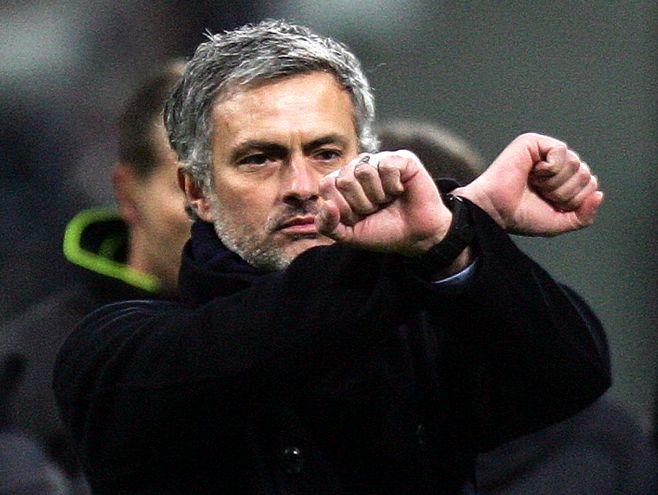
In the home stretch of a Premier League title race, Jose Mourinho has Chelsea FC in the hunt for two prominent trophies, which is nothing new. Now in his second spell with the English soccer club, the self-proclaimed “Special One” is undoubtedly one of the most prominent names in coaching.

Never one to bite his tongue, Mourinho’s time as manager of some of the world’s best teams has been accompanied by a fair share of controversy and scuff ups, but success has rarely eluded the Portuguese man. And while we get ready to witness what ending this season has in store for Chelsea, let’s take a look at the managerial career of the loved and hated manager.
Making a Name in Portugal
For the Portuguese man, it was only natural to begin his managerial career in his home country. After assistant positions with Sporting CP, Porto and Barcelona, Mourinho landed his first job in charge of a club at Benfica in 2000. But after a very short time there and a disagreement with the new club president, Mourinho left to become manager of Uniao de Leira. While in charge of Uniao for over a year, Mourinho took the club to its best ever finishes in the first division of Portugal. Read the rest of this entry →
Tags: historyJose Mourinhosoccerspecial one
Category
Scott Huntington, soccer, Sports History
Posted on
February 14, 2014 by
Martin Banks
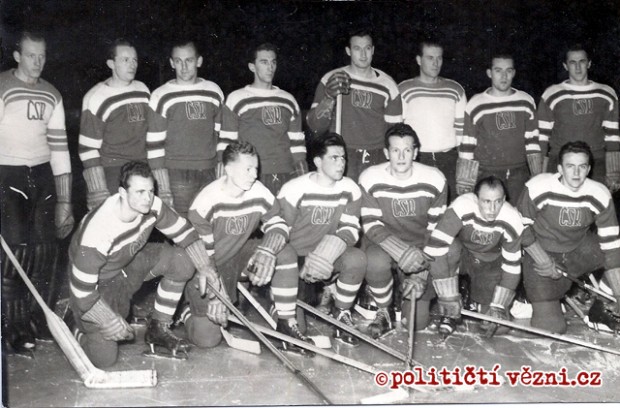
Czechoslovakia was a hockey power during the 1940s and 1950s, winning gold medals in the World Championships in 1947 and 1949. The country’s national teams also won a silver medal in the 1948 Olympics, losing to Team Canada on goal differential. Unfortunately, two tragic events ended the careers of most of the players responsible for this success, launching Czechoslovakian hockey into a dark period where they did not win a major tournament for over 20 years.
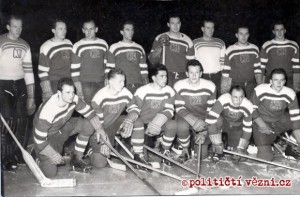
The Plane Crash
In 1948, the Czechoslovakian team was on top of the world, having taken over as perhaps the most dominant hockey nation in the world. In preparation for the upcoming 1949 World Hockey Championships, the team scheduled a couple of exhibition games against Great Britain. The team would fly from Paris, where they had been staying, to London for these games.
Eight of the players flew out the day before the game and spent the night in a hotel. These players arrived without incident and made their way to Wembley Stadium the next day for the game. The remaining six players stayed in Paris for an extra night and left the morning of the game. These players, Miroslav Pokorny, Zdenek Svarc, Zdenek Jarkovsky, Karel Stibor, Vilibard Stovik and Ladislav Trojak, were never heard from again, as their plane vanished over the English Channel.
Read the rest of this entry →
Tags: CzechoslovkaiHockeyNHLolympics
Category
Hockey, Scott Huntington, Sports History
Posted on
February 11, 2014 by
Dean Hybl
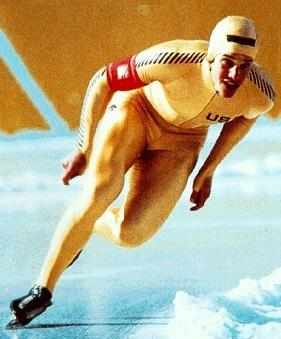
The February Sports Then and Now Vintage Athlete of the Month was the individual star of the Winter Olympics best remembered for the performance of one team.
During the 1980 Winter Olympics in Lake Placid, New York, 21-year-old Eric Heiden completely dominated the men’s speed skating events winning all five gold medals. Read the rest of this entry →
Tags: 1980 Winter OlympicsEric HeidenSpeed skatingWinter Olympics
Category
Speed Skating, Sports History, Vintage Athletes, Winter Olympics
Posted on
February 10, 2014 by
Martin Banks
With the winter Olympics underway, there’s been a lot of talk about snowboarding. But let’s look back a little farther on what came BEFORE snowboarding: longboarding. All you need is a long plank of wood, trucks and four wheels and you have the ability to coast along pavement like a surfer would on water. In fact, surfing is where longboarding and skateboarding got their start. Nowadays, the water version and land versions of boarding stand apart, but they still have histories that intertwine with each other. From the genesis of sidewalk surfing all the way to the modern day competitions, longboarding has come a long way.

Sidewalk Surfing
The lifespan of longboarding can be traced all the way back to approximately the 1950s. Longboarding and skateboarding came to be when surfers in Hawaii began taking their aquatic pastime on land. When the waves weren’t big enough for a satisfactory day of surfing, the surfers found that they could imitate those same actions by using a skateboard on the sidewalk. Thus, sidewalk surfing and skateboards were born. For surfers and teens, skateboarding then quickly caught on in California before skateboards themselves would begin to be modified.
Read the rest of this entry →
Tags: longboardingSnowboardingX-Games
Category
Scott Huntington, Sports History