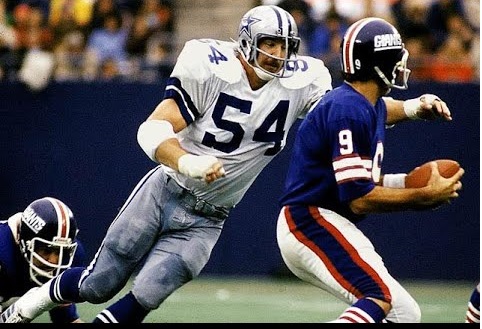
In recognition of the start of football season, we have selected a two-time All-American from the University of Maryland who went on to earn a spot in both the College and Pro Football Hall of Fames as our Sports Then and Now Vintage Athlete of the Month.
Randy White actually came to the University of Maryland as a
fullback, but as a sophomore new head coach Jerry Claiborne recognized that he
had the skills to be a great defensive lineman and quickly moved him to
defense.
Playing baseball is a leisure and pass time activity for
American families. Baseball plays a significant role in the development of
children in the states. Most American baseball fans grew up knowing and playing
baseball. This is the reason that millions of American citizens follow the
sport.
A Brief History of the Sport
The history of baseball dates back to hundreds of years in
the past. In the 1800s, the sport received recognition from the government and
set on the path to create a formal league. The Major Baseball League came into
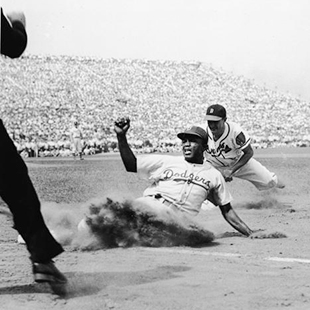
existence in the 1900s. In the modern era, the Jackie
Robinson jersey portrays the end of racial segregation in professional
baseball.
Unity through Baseball
In the past, when America was undergoing a civil war
baseball was a factor in unifying the people. Not only was the sport efficient
in the unity of the North and South of America but it brought people together
because of the athleticism and ability to play the sports. After the game broke
the New York borders, the sport gained popularity as a national symbol of
unity. The pastime was responsible for building a rapport between soldiers of
the different sides and the conclusion of the war.
Fast-forward to modern times and the sport is a factor in
unifying rivals in the global political scene. Amid the growing political
divides in residents of Washington DC, the locals come together to support
their team. The game presents the chance for Americans of different social and
political views to put the differences aside.
Like the musical group that had one big hit then faded off into the world of elevator music and reunion tours, the PGA Championship has more than its share of champions whose greatest moment under the professional golf sun came at what was for many years the final major of the season.
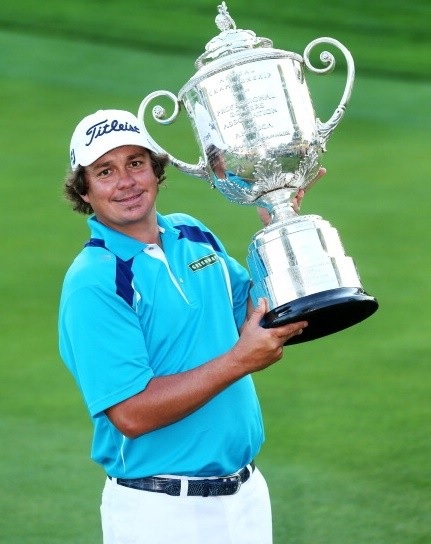
Jason Dufner is one of 33 golfers whose lone major title came at the PGA Championship.
Names like Jim Turnesa, Chandler Harper, John Mahaffey, Wayne Grady, Jeff Sluman, Shaun Micheel, Jason Dufner and Rich Beem grace the victory roster at the PGA Championships while golf greats including Arnold Palmer, Nick Faldo, Hale Irwin and Seve Ballesteros never claimed the crown.
Of the four major championships, the PGA Championship has by
far been the kindest to players looking for their first (and in many cases
only) major championship.
Since World War II, 44 golfers have claimed their first
major title at the PGA Championship. This compares to 38 for the U.S. Open, 31
for the British Open and 31 for the Masters.
The PGA Championship is also home to the greatest number of
golf’s “one hit wonders” as 33 of the first-time winners of the tournament
failed to claim another major title. In comparison, 24 winners of the U.S.
Open, 22 of the British Open and 19 of the Masters failed to win another major.
It is hard to pin-point one specific reason for why so many
golfers have won their only major at the PGA Championship, but there is no
question that it has been the toughest tournament for great players to win
multiple times.
Known for many years as “Glory’s last shot” because it was
always the final major of the year, the PGA Championship moved to second in the
order of majors in 2019. However, because of COVID-19, this year it will be the
first major of the season.
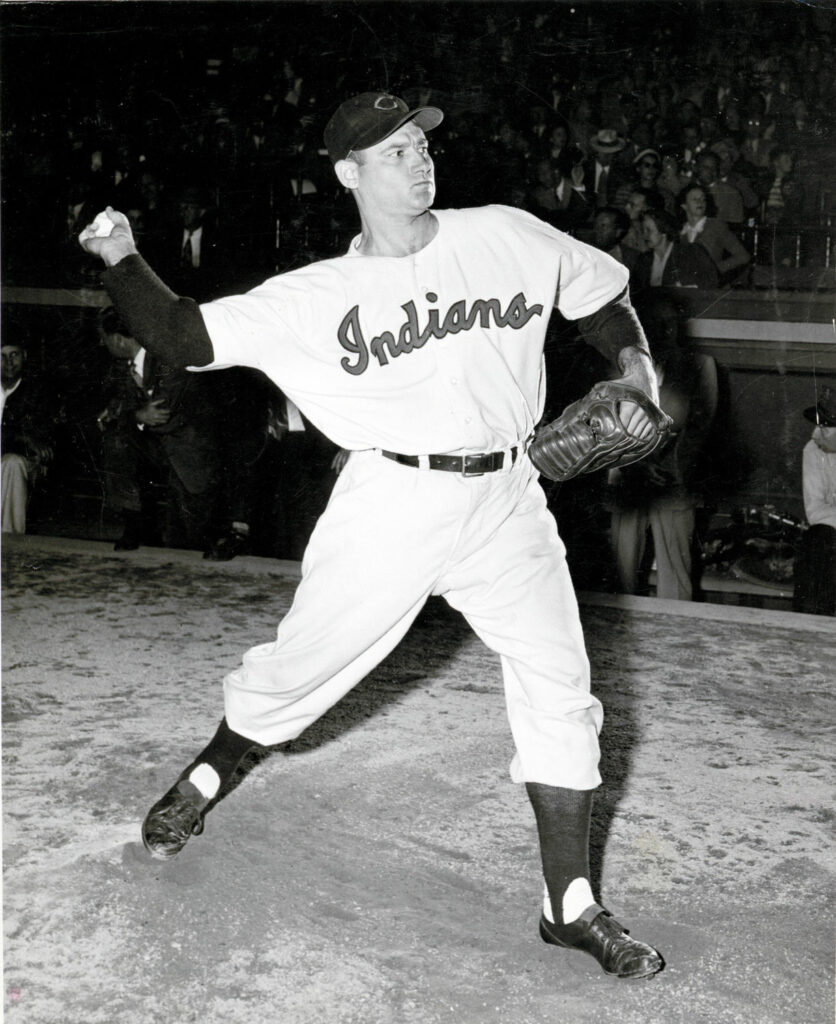
The Sports Then and Now Vintage Athlete of the Month pitched
in four decades, was a veteran of World War II and is one of only two pitchers
to finish with exactly 300 career victories.
Hall of Famer Early Wynn began his career as a 19-year old in
1939 by pitching three games for the Washington Senators. After spending the
1940 season in the minors, he went 3-1 with a 1.58 ERA in a brief stint in the
majors in 1941.
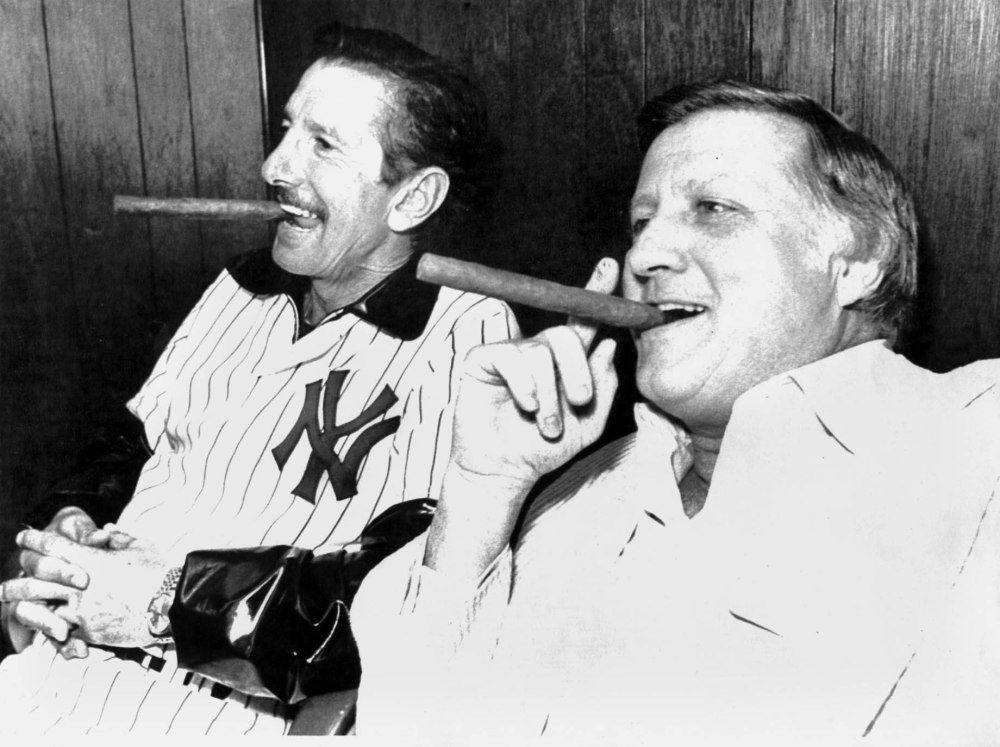
Regardless of whether you love or hate the New York Yankees, you couldn’t help but follow the 14-year saga of Billy Martin, George Steinbrenner and the New York Yankees. Like a car accident, you just had to slow down and see what was happening.
Billy Martin and George Steinbrenner during one of the lighter moments during their 14-year relationship.
It all started 45 years ago when it was announced on August
1, 1975 that manager Bill Virdon was being replaced by the already flamboyant
and controversial Billy Martin. Though owner George Steinbrenner was
technically suspended by MLB at the time for making illegal campaign
contributions to the campaign of President Richard Nixon in 1972, he was in
reality still the top decision maker for the organization and believed that
Martin would provide a fire that was lacking under Virdon.
Martin was familiar to Yankee fans from his time as part of
Casey Stengel’s squad during the hey day of the 1950s. During seven seasons as
an infielder with the Yankees, the scrappy Martin won four World Series rings
and made one All-Star team, but was perhaps better known as a party partner for
all-time great Mickey Mantle.
Many believe that it was his negative influence on Mantle
that led to the Yankees trading Martin to the Kansas City Athletics during the
1957 season. He later played for the Tigers, Indians, Reds and Twins before retiring
following the 1961 season.
He became a major league manager at the age of 41 in 1969
with the Minnesota Twins. He led the Twins to 97 wins and the first AL West
Division title. However, the Twins lost to the Baltimore Orioles in the
playoffs and a number of disagreements with management and off the field issues
ultimately led to his dismissal following the season.
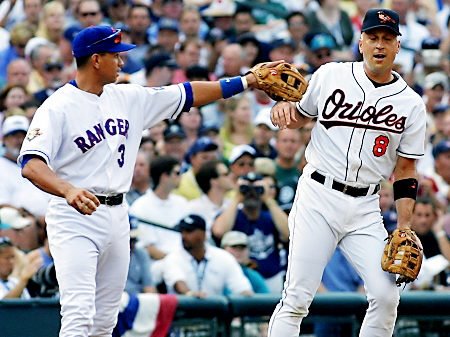
The most memorable moment of the 2001 All-Star Game occurred when Alex Rodriguez convinced Cal Ripken, Jr. to play shortstop. (Photo credit JOHN MABANGLO/AFP/Getty Images)
Over the last three decades, the Major League Baseball All-Star Game has transformed from being simply a game to being a multi-day extravaganza where the game itself is simply one component. For that reason, the game has at times seemed to be anti-climatic, but has still produced some great memories.
After the National League dominated the competition throughout the 1960s and 1970s, including a stretch of 19 victories in 20 games, the rolls have completely reversed in recent years.
The American League has claimed 23 out of the last 30 meetings, including a 13 game winning streak between 1997 and 2009 as well as a current seven game winning streak
In this final installment of the three part series in which we have reminisced about some of the great moments, games and players in All-Star history, we look at the most memorable games of the last three decades. Here are links to part one from 1933-1959 and part two from 1960-1989.
July 10, 1990 (Wrigley Field, Chicago) The addition of lights at Wrigley Field allowed for the All-Star Game to be played at the storied venue for the first time since 1962.
The lights came in handy as the game endured 85 minutes worth of rain delays, which made it difficult for either team to develop a rhythm or establish a consistent pitching rotation.
The American League used six pitchers and the National League went through nine hurlers in the contest.
The game was scoreless until a two-run double by Julio Franco gave the AL all the runs they needed in posting a 2-0 victory.
July 12, 1994 (Three Rivers Stadium, Pittsburgh) In one of the most exciting All-Star Games in recent memory, the lead changed hands five times before the National League pulled out the victory in the 10th inning.
The NL jumped to a 4-1 advantage before the AL stormed back to claim a 7-5 lead entering the bottom of the ninth.