Waiting For The Weekend: Ownership Isn’t all Fun and Names

Daniel Snyder has spent a decade alienating fans of the Washington Redskins while not producing a consistent winner.
Growing up in Southern Virginia, the two closest “big” cities were Richmond and Washington D.C. They were not only the largest cities, but also the closest places with “big time” sports.
As a kid we went to Richmond numerous times each year to see the Richmond Braves (Triple-A team for the Atlanta Braves). With the Redskins being the closest NFL team, you couldn’t go far in the fall without seeing someone sporting the maroon and gold of the Skins. It has been 14 years since I have lived in the area, but I was home last weekend and learned that things have changed a lot (and not for the better) in relation to the sports teams in these two historic cities.
Trouble in D.C.
For generations, there have been very few fan bases in sports that could be considered more loyal than the Washington Redskins. Even when the franchise was enduring a span of 13 straight years without a winning record in the 1950s and 1960s, the stadium was full and there was a waiting list decades long for tickets.
The tenure of future Hall of Fame coach George Allen in the 1970s made Washington a relevant NFL city for the first time in a generation. Then, under Joe Gibbs, the Redskins claimed three Super Bowl titles in a decade and were recognized as a model franchise in the league.
By the time Daniel Snyder purchased the franchise in 1999, the Redskins were no longer regularly contending for the Super Bowl, but played in a beautiful new stadium and still sported one of the most loyal fan bases in the league.
While I am not a Redskin fan and don’t live in the DC area, by all accounts, Snyder has spent the last decade doing everything he can to drive a wedge between the franchise and its loyal supporters. Steve Coll of the New Yorker recently wrote a very nice piece where he chronicles how things have changed for the team of his youth.
There is no question that when someone spends hundreds of millions of dollars ($800 million in Snyder’s case) to purchase a sports team, they own the team and have the right to do whatever they want. However, successful owners seem to recognize that while the team belongs to them, it also belongs to the city and fans who were there before this particular owner and who will be there long after he/she is gone.
Owning a sports team is not like owning any other business. It has living and breathing components that don’t always respond to the typical ownership tendencies of intimidation or throwing money at a problem.
Successful owners have generally kept their egos in check and recognized that their greatest chance at success is to stay in the background and let the people who know about the sport make the decisions related to the franchise.
Certainly there have been exceptions like George Steinbrenner and Jerry Jones, but even as both have produced championship teams, they also have experienced significant periods of mediocrity that were generally a result of them trying to over manage.
In describing Snyder’s tenure with the Redskins, Coll writes, “The issue is not the team’s performance on the field, dismal as that is. It is the culture created by the owner—one of greed, expediency, and mean-spiritedness. The general atmosphere around the team suggests Zimbabwe—a failed state, an intractable dictator, and an impotent and suffering populace.”
Snyder’s most recent example of heavy-handedness is his insistence that FedEx Field is immune from the concept of freedom of speech. Seems that any Redskin fan that brings a sign to the game questioning the performance of the 2-5 Redskins will be guided to the garbage cans as they enter the stadium to dispose of the “contraband.”
And if you dare sneak in a sign and manage to get it to your seat, you will be removed from the stadium once it is seen.
This comes on the heels of Snyder’s efforts earlier this year to sue season ticket holders who were unable to pay for tickets due to the worst economic recession in the last 60 years.
Obviously Snyder is a savvy businessman, but while he may be very successful running his other businesses, he has been a total failure running an NFL team. His team hasn’t been successful on the field with just three winning seasons, but he has been very successful in alienating one of the most loyal fan bases in the NFL.
I never really cared for the Redskins as a kid. Their fans (including many of my own family members) were a little too over-bearing for my taste. However, now I can’t help but feel sorry for Redskin fans, as they have seemingly gone from the penthouse to the outhouse.
I wish I could say that there was a light at the end of the tunnel, but I tend to believe that as long as Snyder is the owner that light isn’t sunshine, but instead another on-coming train.
It’s in the Name
For 40 years, the city of Richmond, Virginia served as home to the top minor league team for the Atlanta Braves. Fans in Richmond were loyal to the Braves through the good times and the bad times.
As a youngster, I got to watch players such as Dale Murphy, Glenn Hubbard, Brett Butler and Steve Bedrosian earn their stripes at Triple-A.
Later, I spent a year serving as an intern for the Braves at a time when future building blocks of their championship teams, including Dave Justice, Steve Avery and Kent Mercker were making their way through the minors.
Unfortunately, two years ago, after being unable to work out an agreement on a new stadium, the Braves decided to leave Richmond. The 2009 season was the first without professional baseball in Richmond in many generations.
As you can imagine, when it was announced in September that baseball would be back in the city in 2010 fans were ecstatic. Though the team will be a Double-A squad in the Eastern League, rather than Triple-A in the International League, it really doesn’t matter to the fans.
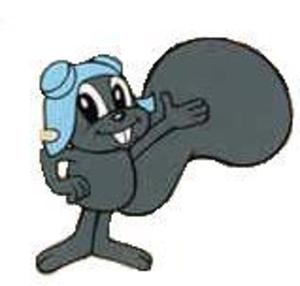
The Richmond Flying Squirrels will be looking to create a mascot that bumps Rocky from being the most recognizable flying squirrel around.
What does matter is the name and that is where things seem to have gone awry.
Despite fan suggestions of numerous names that depict the great history of the city, the final choice for the new team name is the Richmond Flying Squirrels.
I was quite amused at some of the comments local residents made about the name. In particular, these from Elizabeth Thalhimer Smartt made me laugh.
“Don’t get me wrong — I’m thrilled the team is coming. Take me out to the ballgame and I’ll cheer for my home team. But the Richmond Flying Squirrels? Oh, my.
The last squirrel I saw “flying” ended up roadkill.”
It will take some time for me to get used to calling the Richmond team the Flying Squirrels instead of the Braves, but at least the new nickname has given fans something to talk about other than how frustrated they were not to have a team.
Birthdays
Each week we look at some current and former athletes who were born during the week.
Here are some notable sports figures born during this week:
October 30 – Jim Perry (1936), Phil Chenier (1950), Danny Tartabull (1962)
October 31 – Wilbur “Pete” Henry (1897), Carl Hubbard (1900), John Lucas (1953), Glenn “Doc” Rivers (1961), Fred McGriff (1963)
November 1 – Leon Hart (1928), Anne Donovan (1961)
November 2 – Ken Rosewall (1934), Willie McGee (1958), Kevin Grogan (1964)
November 3 – Bob Feller (1918), Larry Holmes (1949), Phil Simms (1955), Darren Sharper (1975)
November 4 – Jimmy Piersall (1929), Dick Groat (1930), Bubba McDowell (1966)
November 5 – Earle “Greasy” Neale (1891), Bill Walton (1952), Mark West (1960), Johnny Damon (1973)
Related Posts
 Mickey Lolich: 1968 World Series Hero
 The 1914 World Series: The Miracle Braves and the First Sweep
 Fernando Valenzuela: A Legendary Career that Transcended Baseball
 Remembering Mark Fidrych: The Bird Who Captivated Baseball
 Jackie Joyner-Kersee: Track and Field All-Time Great
 Olga Korbut: The Sparrow from Minsk



 Loading ...