Analysis. History. Perspective.

Sports Then and Now


Archive for the ‘Running’


Optimizing Your Training Plan for Triathlon Success Comments Off on Optimizing Your Training Plan for Triathlon Success

Posted on July 28, 2026 by John Harris
Image Credit: Unsplash

Taking on a triathlon is a big deal. It really pushes your limits across three different sports. Getting ready for a swim, bike ride, and run all in one event takes more than just physical effort; you need a smart, structured plan. Understanding the history of triathlon also gives you a greater appreciation for how the sport has evolved into the global endurance challenge it is today. A good plan acts like your personal map, guiding you through months of training so you show up on race day healthy, confident, and ready to do your best. This guide will walk you through the key parts of building a training plan that actually works for you. Knowing how to set up your training for different distances and intensities is important for success, especially when you’re looking at a periodized triathlon plan.

Periodization Principles Explained

The backbone of any good endurance training program is something called periodization. This just means you break your training year into specific phases, and each phase has its own focus and goals. Instead of trying to be in top shape all year, periodization lets you steadily build your fitness and hit your peak right when race day arrives. A typical triathlon training cycle has several main phases. These phases, often called periodization basics, carefully change up the intensity and amount of your workouts to get you performing your best and keep you from overtraining.

The Base phase is usually the longest. Here, you focus on building up your aerobic endurance and making sure your technique is solid. Workouts during this time are generally less intense, but you do more of them. This is where you build the foundation for all your future speed and strength. After the base phase comes the Build phase, where you crank up the intensity and do efforts that are more specific to your race. You’ll start adding tempo workouts, intervals, and sessions that feel like what you’ll do on race day.

Read the rest of this entry →


The History of Running as a Sport 1

Posted on January 13, 2020 by Brooke Chaplan

We all grew up as kids running around playing imaginary games. We didn’t see running as a chore but, rather, something entertaining to do. As you age, running can start to become more of a sport and workout activity than just a fun imaginary game. Here is a quick look at how running has developed as a sport over the history of mankind.

Introduced As a Sport in 776 BCE

If you thought your grandparents were old, think again. Running was first introduced as a sport back in 776 B.C.E. This is the time of ancient Greece where Olympia was a sports town. In 724 B.C.E. the town of Olympia decided to host its first Olympics, which is the first of the modern world games that we know today. The foot race was held in a stadium in Olympia and was the sole competition of the first games.

Reintroduced in the 1896 Olympics

After the Olympic games were restarted in 1503 there were many different sports added to the world competition. In 1896, the sport of running was added to the Olympic games at the urging of a few different people. There were the Greeks who wanted to introduce running into the events as a way to pay tribute to their heritage. Michel Breal, who was a French philologist, urged for the sport to be in the form of what is known as a marathon. At the first reintroduction of the sport, it was a male-only event.

Read the rest of this entry →

Four Things Runners Need to Know to Prevent Ankle Injuries Comments Off on Four Things Runners Need to Know to Prevent Ankle Injuries

Posted on October 06, 2018 by Joe Fleming

running-2Of all the injuries that can affect runners, ankle injuries are one of the most common. Even professional runners like Olympians Usain Bolt and Paula Radcliffe have dealt with ankle injuries that negatively affected their careers.

Whether you’re an Olympic hopeful or just someone who runs for fun, it’s crucial that you take steps to keep ankle injuries at bay. Not only can an injured ankle prevent you from running consistently, but it can also negatively affect your movement patterns and make other forms of exercise more difficult.

Read on to learn everything you need to know about preventing ankle injuries while running.

Common Ankle Injuries for Runners

The following ankle injuries are probably the most common ones that can affect runners:

Ankle Sprains

An ankle sprain occurs when the ligaments of the ankle are damaged or torn.

In runners, ankle sprains are often the result of a misstep when coming down from a curb, or from tripping over rocks or cracks in the road or sidewalk.

Often, sprains do not cause lasting damage, particularly if they’re mild and diagnosed early. They’re typically characterized by swelling and constant pain, even when you’re at rest.

Overuse Injuries

As their name suggests, overuse injuries are the result of overuse.

In runners, some common overuse injuries include posterior tibial tendonitis, which affects the back of the ankle, and peroneal tendonitis, which affects the inside of the ankle.

With overuse injuries, you’ll likely feel pain during activity, but not when you’re at rest.

Stress Fractures

Stress fractures are small cracks or severe bruising that affects the bone. Stress fractures can be brought on by an acute injury, like a fall, or by overuse. Runners are particularly prone to stress fractures in the ankles and the feet.

How to Prevent Ankle Injuries

In order to avoid these common ankle injuries, it’s important to take the precautionary measures. They’ll help you strengthen your ankles so that you’re more resilient. They can also correct improper movement patterns that increase your injury risk. Read the rest of this entry →

The Greatest Athletic Feat Ever? 1

Posted on September 22, 2018 by Joe Fleming

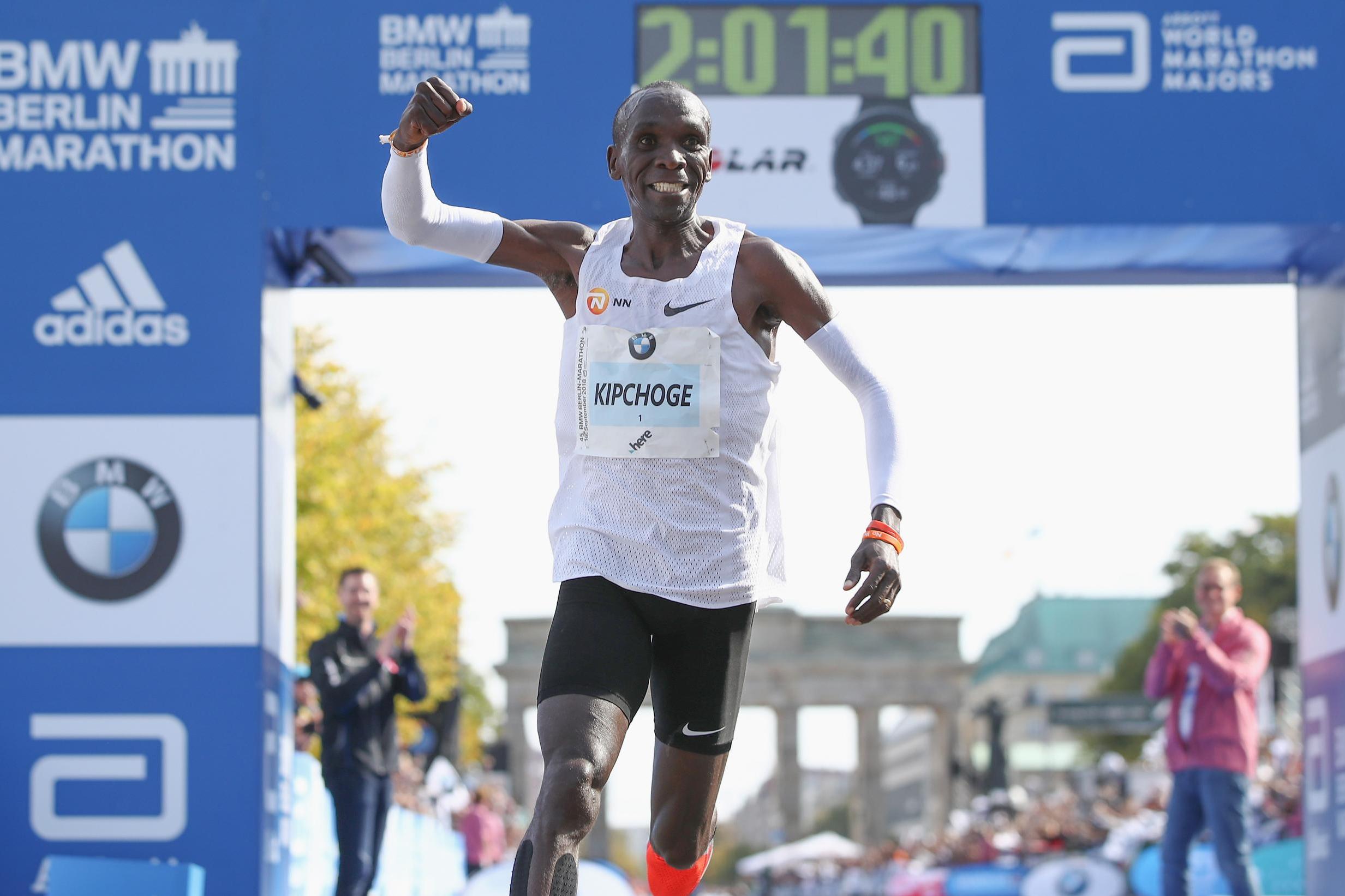
KipchogeMarathon runners train for years and years to not just compete against other marathoners but themselves, working tirelessly to shave even a handful of seconds off their personal best time. One marathoner put the rest to shame recently, running the fastest marathon ever and completely obliterating the world record.

The most dominant marathon runner of the modern era, Eliud Kipchoge, of Kenya, shattered the world record for marathon running in his most recent race in Berlin on September 16, 2018. He passed the finish line after only 2 hours 1 minute and 39 seconds (2:01:39). The previous world record was 2:02:57.

To put that in perspective, Kipchoge ran 26.2 miles in around a couple hours averaging 4 minutes and 38 seconds per mile. It’s one thing to run that fast. It’s another to run that fast for so long.

Granted, this wasn’t Kipchoge’s first rodeo. He is the reigning Olympic gold medalist having won the marathon in 2016 in Rio, which was just one of the 9 marathons he has won since 2013 (not including the most recent Berlin race). That is practically unheard of.

This most recent marathon was his first time, however, to inch so close to the 2-hour mark for an official timed marathon race. (He did run a marathon in 02:00:25 in 2016 for a Nike experiment, however, it was on an optimized track). Read the rest of this entry →

Get To Know: The World’s Fastest Marathoners 1

Posted on May 15, 2017 by Francesca Russo

It is believed that marathon is the most difficult of all races as it is the ultimate test of fortitude, where sportsmen can rely on own muscles and fighting spirit only. A professional marathoner runs at an average speed of 20 kilometers per hour, which is twice more than the speed of reindeer migration, and it’s being done without any special equipment or tools.

The International Association of Athletics Federations (IAAF) is the international governing body for the sport of athletics, which ratifies world records in the marathon. So, who are they, the fastest people in the world?

The World’s Fastest Marathoners: Men

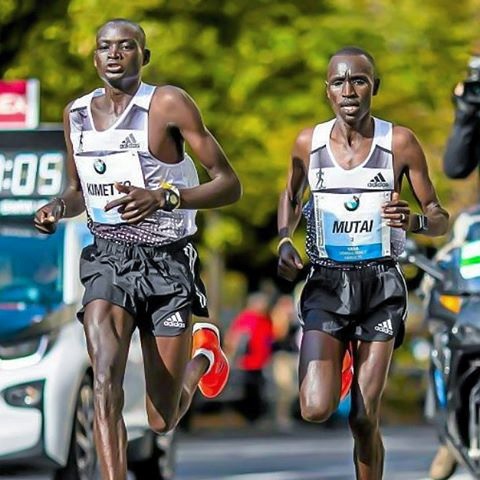
1. Dennis Kimetto from Kenya was recognized as the best marathon runner: he broke the previous world record in Berlin, on September 28, 2014, with his winning 2 hours, 2 minutes, and 57 seconds. Dennis grew up in a family of athletes, one day he had to quit doing sports and start helping his parents on the farm instead because of financial issues. But when watching the broadcasts of the Sydney Olympics races, the future athlete realized that he must devote his life to running. Interesting fact: Dennis Kimetto could probably beat a horse in a 26.2-miler.

Marathon-1

2. Kenenisa Bekele is a 34-year-old world champion from Ethiopia. He won the Berlin Marathon in 2016 (2 hours, 3 minutes, and 3 seconds), moving Emmanuel Mutai (Kenya) down to the fourth place from the second one, where he had been with his 2:03:13 since the Berlin Marathon in 2014. Kenenisa is also a repeated world champion (2003-2009), three-time Olympic champion (in Athens and Beijing), twice world record holder at a distance of 5 and 10 km. The athlete says that everything began in childhood when he had to run to school, which was 10 km far from his house!

3. Eliud Kipchoge is the athlete from Kenya, who took the third place in the rate, which previously belonged to his countryman Patrick Makau (2:03:38 in Berlin, 2011). Eliud took part and won the Rotterdam and Chicago Marathons in 2014, beat his personal record at the Berlin Marathon (5 seconds faster) and first appeared at the London Marathon in 2015, won a gold medal at Rio 2016 Olympics. But only at the London Marathon 2016, he became the 1st with a track record and a new personal record of 2 hours, 3 minutes, and 5 seconds. Read the rest of this entry →

3 Exercises To Increase Stamina – Endurance For A Fight 3

Posted on December 30, 2016 by John Torgerson

Marathon, black silhouettes of runners on the sunsetStamina and endurance are two terms widely and interchangeably used by most of the people without knowing what it actually means. According to the professionals, stamina refers to cardio functions whereas endurance to the muscular functions.

Therefore, stamina is said to be the ability of a person to work longer instead of harder. Endurance, on the other hand helps the person to exert while staying active for a long period of time, and have the ability to resist, withstand and recover at the same time. For this very reason, every sport requires sports specific stamina as well as endurance training. So, keeping that in mind, here are 3 exercises that will help you build stamina and endurance required to fight like a pro.

Jog, Run, & Repeat

Sounds simple enough, doesn’t it? Despite that, it affects the body in a wide variety of ways. Walking, for instance, is a simple, low impact exercise perfect to get more active. But, when combined with jogging or running at a slow speed can get the heart beat elevated. This can be thought as a perfect way to build stamina and endurance. However, this alone won’t do any good while preparing for a fight.

Reason being, in a fight you need to go hard at one moment, catch your breath the other and then again go back fighting hard. So, that means the heart rate won’t stay stable constantly, it will go up and down throughout the fight. Therefore, jog for a moment and then sprint as fast as possible, slow down again for 10 seconds to catch your breath and sprint again. This won’t be easy, you might as well want to give up. Instead keep pushing yourself forward. To build endurance there is no easy way, neither are there any alternatives to running only body wipes to wipe that sweat off. Read the rest of this entry →

  • Post Categories


↑ Top