Analysis. History. Perspective.

Sports Then and Now


Archive for the ‘Tennis’


Top 9 Female French Open Finalists: Chris Evert Best of the Best 5
Posted on April 21, 2010 by JA Allen
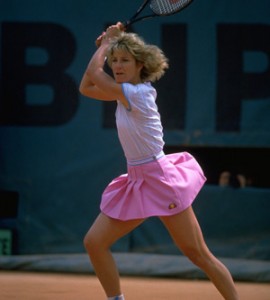
Chris Evert is No. 1 for the Ladies Tour at the French Open

Chris Evert is No. 1 for the Ladies Tour at the French Open

How do you measure the greatness of an athlete within their respective sport? What factors determine the degree of greatness over a period of time––years or decades?

Further, how do you determine who is No. 1 in any given list or ranking? First you must find a pattern and then you must determine the significant components of the ranking––does each factor merit being used as part of the overall equation?

Sometimes it does, without question––like the score in a game. The highest or lowest score wins as in football or golf.

It is not always a simple task to determine who is the greatest because such discussions invariably have subjective components.

For this ranking, first consider the number of times a woman made it to the French Open finals since 1968 (Open Era) as the initial demarcation of greatness. To be considered she must have made it to the finals of the French Open at least 3 times.

Within the number of appearances, measure the wins against the losses in a given number of tries.

No. 1 Chris Evert ––Nine French Open Finals

Chris Evert winning seven of nine final appearances remains the undisputed leader on the clay at the French Open in Paris surpassing even her male counterparts in some estimations.
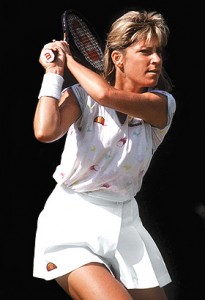
Evert won 7 French Open titles in 9 final appearances.

Evert won 7 French Open titles in 9 final appearances.

Clay brought out the strengths of Evert’s game––her patience, determination and her ability to construct points. She was tireless and unflappable on the red clay at Stade Roland Garros––hence her nickname, the Iron Princess.

The fact that she owns the clay court record with an 125-match win streak from 1973-1979 illustrates her prowess on the surface. During that run she lost only seven sets.

It was the one surface on which Evert generally prevailed over her arch-rival Martina Navratilova whose one weakness might have been the slow clay. They met in four finals on the red dirt with Evert coming out on top in three––all Evert’s wins over the Czech were three-set finals.

In all Evert appeared in nine finals at the French Open in 1973, 1974, 1975, 1979, 1980, 1983, 1984, 1985, 1986, winning them all except in 1973 and 1984.

Evert’s winning percentage stands at 92.4% [73-6].

Read the rest of this entry →

Men’s Tennis Power Rankings: Rafael Nadal Hits Heights On Clay 10

Posted on April 20, 2010 by Marianne Bevis
ATP Masters Series Tennis Tournament, Final match, Rafael Nadal vs Fernando Verdasco

It’s April, and it’s the red clay of the European swing. So it has to be Rafael Nadal.

Though some players fitted in tournaments on the red stuff in Latin America in February, this is where the clay season takes centre stage, and what a stage!

The first of the terracotta Masters is held at the Monte Carlo Country Club, with the Mediterranean as its backdrop. It is hosted by royalty: Prince Albert of Monaco was flanked by Boris Becker and three-time Monte Carlo champion Ilie Nastase. Meanwhile, Nadal held court before them, leading a phalanx of no fewer than 11 Spanish players in a draw of 56.

The weather offered up some challenges: dust storms, rain, sometimes both together. Through it all, five Spaniards made the quarterfinals, three of them went on to the semis, and two fought it out in the final.

The result had a certain inevitability about it. Nadal had ruled here for the last five years and it was a fitting place for him to take his first Masters title in 11 months.

The strength and depth of the Spanish contingent also means that this week’s Power Rankings have a certain inevitability, too. There are five in the top dozen, with two topping the field. Read the rest of this entry →

Roundup: What Monte Carlo Means for… 1

Posted on April 19, 2010 by Rob York
ATP Masters Series Tennis Tournament, Final match, Rafael Nadal vs Fernando Verdasco

After 11 months without a title, Nadal's sixth Monte Carlo title was a tasty treat.

Rafael Nadal: The point that encapsulated the difficulties Nadal’s opponents face on clay took place in the final with the top-ranked Spaniard serving at 1-0. Having surrendered his opening service game at love, Fernando Verdasco had suddenly found his forehand on his compatriot’s serve, ripping a pair of winners to force a deuce.

Then, during an intense rally on the deuce point, Nadal rifled a flat, sharply angled backhand Verdasco could not reach to set up game point. Verdasco had Nadal on the defensive here, finishing with a backhand volley so acute that it would have reached the stands before it bounced a second time. And that was where Nadal was when he reached it, flicking a backhand that clipped the line on the opposite side of the court.

At his very best, Nadal refuses to concede any points on clay. That’s why he lost only 14 games in five matches (an average of a little less than three per opponent) this past week. That’s why Verdasco raised his hands in celebration upon winning a single (very long) point in the second set.

And that’s why Nadal’s opponent on Sunday had pretty much surrendered the match once he was broken in the second set. Nadal has much the same effect on clay court opponents that Bjorn Borg did in the late-’70s, turning every point into at least a 5K. Read the rest of this entry →

World No1s Roger Federer and Serena Williams Top Rome Draws 3

Posted on April 18, 2010 by Marianne Bevis
Charity tennis exhibition organised for the victims of the Haiti earthquake before the Australian Open tennis

Roger Federer and Serena Williams bestride their respective tennis worlds rather as Everest and K2 dominate the Himalayas.

They may be just two amongst many world-beating champions, yet they remain the standard against which those others are measured.

They can be conquered by the fittest, most ambitious, most determined of individuals, just as those two mighty mountains can, but they remain head and shoulders above the rest. The rankings say it all.

Williams has topped the women’s tour since November 2009 and is currently more than 1,500 points clear of the field. Federer has topped the ATP rankings since Wimbledon 2009 and currently towers over the chasing pack by more than 3,000 points.

This is all the more striking because the two No.1s of tennis have been notable by their absence since they both reasserted their superiority over the competition on the Grand Slam stage of the Australian Open.

Take Williams. Though she is clear of the chasing pack in the rankings, she has played eight fewer tournaments in the last 12 months than the second placed Caroline Wozniacki: just 16 events. In fact only one other player in the top 20 has played fewer than Williams, and that is Kim Clijsters, who only rejoined the tour last August.

Even more remarkable, though, is that Williams has played just two tournaments this year, reaching the finals in Sydney and winning in the Australian Open. That’s just 11 matches, ten of them wins. She did add some court time to her year by playing—and winning—the doubles in Melbourne as well. But since then, she has been laid low by a knee injury, so has not played a single match since the end of January.

Then last week, Williams pulled out of the Premier event in Charleston. She was not scheduled to play at Rome either, but the good news is that she just announced she has taken a wild-card entry for the Italian Open after all.

The return will be intriguing. How will her fitness be after three months with no match-play? Will she be prepared for the sudden transition to clay after her intensive fortnight in Melbourne brought the curtain down on her hard court season? Read the rest of this entry →

Top Ten French Open Legends from Agassi to Borg 2

Posted on April 17, 2010 by JA Allen
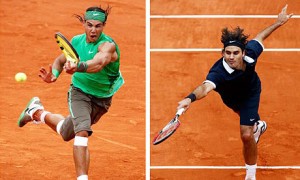
Top two active French Open finalists, Rafael Nadal and Roger Federer.

Top two active French Open finalists, Rafael Nadal and Roger Federer.

What is it about the red clay at Stade Roland Garros that lifts some players to great heights while stopping others dead in their tracks? Is it a lack of patience or mental acumen that causes some great players to shut down on the red dirt?

The fact remains that in order to get to the very top of the men’s game, you must find an answer to the clay courts at the French Open.

For this ranking first consider the number of times a man made it to the finals of the French Open as the demarcation of greatness. Next consider the wins against the losses within a given number of tries.

No. 1 Bjorn Borg––6 French Open Finals

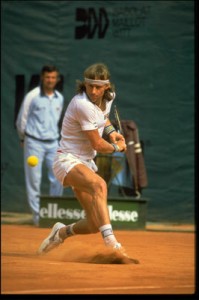
Bjorn Borg won the French Open six times in six tries.

Bjorn Borg won the French Open six times in six tries.

Bjorn Borg still reigns supreme in the record books at Stade Roland Garros, even after he retired from the game at age 26 almost 30 years ago. The red dust became the soul of his game. No one before him or since has ruled the red clay in Paris more definitively than the man from Sweden.

Borg won 41 consecutive sets and holds the record at the French Open.

He won the French Open six times starting in 1974––followed by victories in 1975, 1978, 1979, 1980, and 1981. He never lost in a French Open final.

If you think about how many more French Open titles Borg might have won had he continued, the mind boggles because no one was close to defeating him. But then, we will never know––nor should such thoughts linger when estimating his place in tennis history.

Borg’s winning percentage at the French Open was 96% (49-2).

Read the rest of this entry →

In Praise of Diversity: Bring Back the Net-Rushers 42

Posted on April 13, 2010 by Rob York
US-INDIAN WELLS-TENNIS-MENS SINGLE-FINAL

Ljubicic's big serving and aggressive play netted him the Indian Wells title.

“Each hit their forehands with a moderate loop and moderate topspin. Each used a compact backswing on their relatively flat two-handed backhands. Their shots were low-trajectory and medium paced, they stayed away from big cuts, they rarely aimed for the lines, they used a slice as a change-of-pace but not as an approach, and when the score got tight, they got tight and played even safer.”

So said Steve Tignor in describing an early-round encounter between Marcos Baghdatis and Arnaud Clement at this year’s Indian Wells. Though Baghdatis is known as a streaky shotmaker and Clem

ent a plucky counterpuncher, Tignor used this match to illustrate a point that many have made about modern tennis: the power baseliners have taken over, and squeezed out everyone else.

So, which speedy guy between the height of 6’0” and 6’2” used his big forehand, safe serve and solid backhand to win the greatest percentage of backcourt rallies, combined with a good number of safe volley putaways?

Wait a minute … Ivan Ljubicic?

That can’t be right. He’s 6’4” and never been known for his movement or his forehand. His game is so ’90s, what with the aces and all the net-rushing. He’s g

ot a pretty good backhand, but I hear he likes to slice it a lot of the time, and sometimes even goes for winners when he doesn’t have a short ball! Read the rest of this entry →

  • Post Categories


↑ Top