How Olympic Fencing Evolved from Duel to Discipline
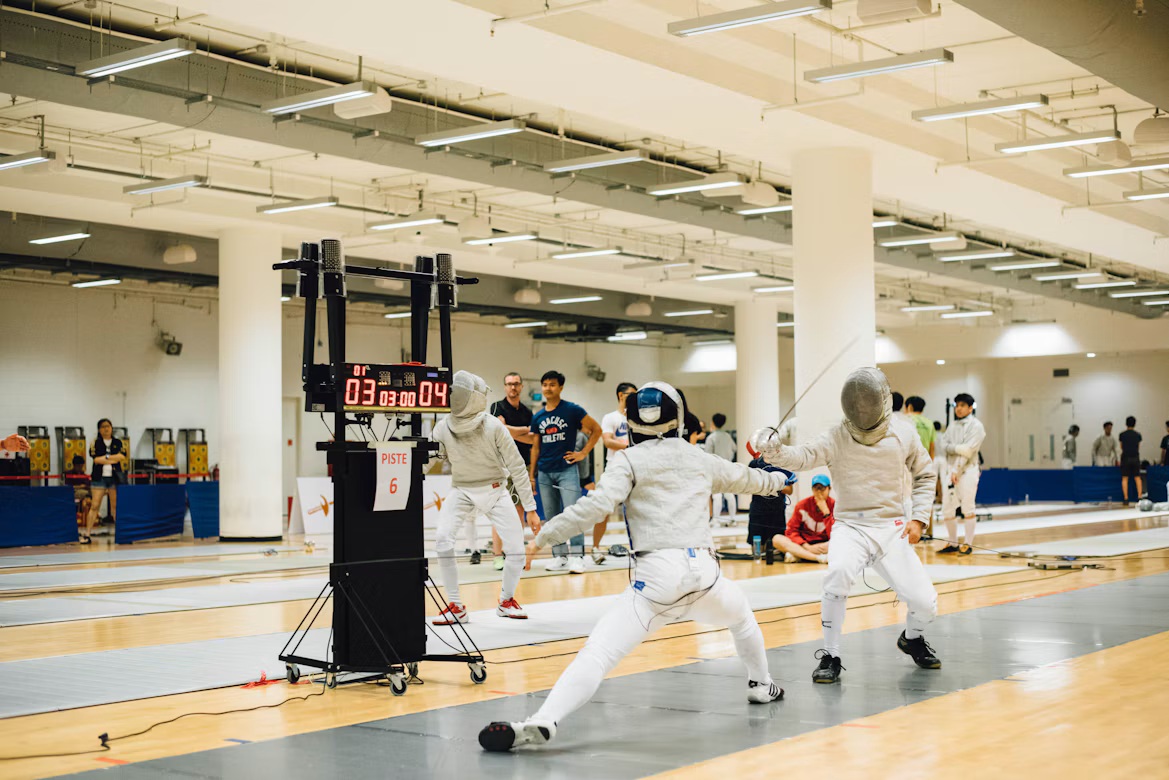
Modern Olympic fencing turns quick footwork, tactical judgment and precise blade control into a contest decided within fractions of a second. Its format may look thoroughly modern, yet the sport carries traditions developed across centuries.
Formal instruction, changing social customs and electrical scoring gradually transformed personal combat practices into a regulated athletic discipline. That progression explains many details viewers still see today, from the fencers’ opening salute to the distinctive rules governing foil, epee and sabre.
Roots in Historic Duels
European fencing developed from systems taught for personal defense and formal dueling. From the 16th century onward, instructors recorded positions, footwork and attacking actions in detailed manuals. Schools in Italy, France and Spain developed recognizable styles, while skilled teachers helped turn blade handling into a subject that could be studied and practiced.
A useful overview of fencing history shows how those traditions influenced later rules and techniques. As social attitudes changed and dueling declined, fencing halls offered a controlled setting for instruction. Protective clothing, blunted tips and agreed conventions allowed students to test timing and distance with far less risk. The emphasis steadily moved toward athletic skill.
Standardizing Rules for Fair Play
Fencing appeared at the first modern Olympic Games in Athens in 1896, but international consistency took time. Different schools still favored their own terminology, target areas and interpretations of a valid attack. The founding of the International Fencing Federation in 1913 helped establish shared rules for major competitions.
Those standards now give each discipline a distinct identity. Foil limits the valid target to the torso and uses right-of-way rules. Epee allows touches across the whole body and can award both competitors a point during a near-simultaneous action. Sabre includes the upper body as its target and permits touches with the edge of the blade.
Beginners choosing a fencing sword should first confirm which discipline their club teaches, since each version has different equipment and scoring requirements.
Engineering the Modern Athletic Blade
Competition equipment has evolved alongside the rules. Sporting blades are flexible enough to bend during a touch, while their dimensions and weight must stay within tightly controlled limits. A foil has a small circular guard and a flexible rectangular blade. The epee uses a larger guard and a stiffer triangular blade, while the sabre has a guard shaped to protect the hand.
Electrical scoring brought another major change. Epee adopted electric judging at top-level events during the 1930s, foil followed in the 1950s and sabre completed the transition in the late 1980s. Cords, conductive clothing and scoring boxes can now register extremely brief contact.
Competitors should inspect blade straightness, tip movement and body-cord connections before every session. A loose wire or sticking tip can interrupt a bout and create misleading scoring signals.
Precision over Brute Force on the Strip
A fencing strip measures 14 meters long, giving competitors space to advance, retreat and manage distance. Success depends on controlling that space. A small step can draw an opponent forward, while a sudden change of rhythm can create the opening for a clean touch.
Watch an experienced fencer’s front foot during a bout. It often signals the preparation for a lunge before the blade moves. The opponent reads that motion and must decide whether to defend, retreat or counterattack, sometimes within a few hundredths of a second.
Practice becomes more productive when fencers isolate one skill at a time. Short drills can focus on maintaining balance after a lunge, keeping the blade point steady or changing direction without crossing the feet. Video also helps reveal oversized steps and unnecessary arm movement that may feel natural during live action.
Olympic fencing still preserves the salute, formal commands and tactical exchanges inherited from its past. Yet the decisive moment belongs to the modern athlete who controls distance, recognizes an opening and lands a touch precise enough for the scoring light to confirm it.
Integrasi fasilitas publik di Mal Pelayanan Publik semakin mempermudah pengurusan administrasi warga dalam satu lokasi terpadu. Kehadiran layanan pembuatan paspor hingga fasilitas sidang mini memberikan efisiensi waktu yang sangat berarti. Informasi mengenai pemanfaatan layanan paspor MPP Cilegon sangat membantu warga lokal.
naturally like your web site however you need to take a look at the spelling on several of your posts. A number of them are rife with spelling problems and I find it very bothersome to tell the truth on the other hand I will surely come again again.